The global number of cases in the Ebola outbreak has exceeded
10,000, with 4,922 deaths, according to the latest estimates by the
World Health Organisation released on Saturday. Three countries with
shared borders – Sierra Leone, Liberia and Guinea – account for all but
10 of the fatalities, with only 27 cases occurring outside the west
African epicentre.
The UN agency said the number of cases was now 10,141 but that the true figure was much higher, as many families were keeping relatives at home rather than taking them to treatment centres and are burying their dead without official clearance. It said many of the centres were overcrowded.
The latest report showed a rise of 400 cases in the last three days in Sierra Leone and Guinea but no change in the number of cases and deaths in the worst- affected country, Liberia.
It comes as an analysis of Ebola figures by development consultants the African Governance Initiative (AGI) suggest that even with current efforts to build more hospital facilities in the affected nations, there will be no medical personnel to staff them and there will be a shortage of more than 6,000 hospital beds in Guinea and Sierra Leone by December if the WHO’s worst-case scenario figure of 10,000 new cases a week by the end of the year is reached.
AGI chief executive Nick Thompson said: “The international community badly misjudged the impact of the Ebola epidemic in its first few months and is compounding that error by failing to act quickly enough now.” He called for other countries to join Cuba, the US and Britain in sending health workers to the region.
On Saturday Barack Obama used his weekly radio address to stress it would be “science not fear” that would tackle Ebola as New Yorkers followed the fate of Craig Spencer, the Médecins sans Frontières doctor who was confirmed as suffering from Ebola six days after he returned from working in Guinea. He had been riding the subways and eating in restaurants before developing an Ebola fever, causing panic and anxiety among Americans.
Late on Friday, New York governor Andrew Cuomo said the risk was grave and ordered an automatic 21-day quarantine for anyone returning from the Ebola-affected regions. He criticised the doctor for not following such a procedure voluntarily.
But New York’s health commissioner, Dr Mary Bassett, who was said to be furious with the governor, told reporters Spencer had handled himself “really well” and reported to authorities as soon as he had symptoms – the only time when a patient is contagious and can spread the virus through their body fluids.
The New York Daily News claimed that an unusually high number of hospital workers have reported in sick since Spencer’s arrival. Despite an all-clear from health officials, the Brooklyn bowling alley Gutters, which Spencer visited hours before he began to feel unwell, was still closed. One couple, expecting an evening of experimental punk music at the club, said they were disappointed.
Nurse Kaci Hickox, the first person in New Jersey placed under the 21-day quarantine after she landed at Newark airport on Friday, issued a stinging criticism of her treatment on Saturday after she tested negative for the virus. Hickox, who had been working with Ebola patients in Sierra Leone, described how she was held in isolation for seven hours and given only a granola bar to eat. She told the Dallas Morning News she was scared for healthcare workers who declare they have been fighting Ebola in west Africa. “I am scared that, like me, they will arrive and see a frenzy of disorganisation, fear and, most frightening, quarantine.”
Meanwhile, it has been announced that a million doses of an Ebola vaccine will be produced by the end of 2015. The WHO said that “several hundred thousand” will be produced in the first half of the year.
In Australia on Saturday the head of the country’s medical association, the AMA, called on the government to help in Africa. The AMA president, Professor Brian Owler, said that while Britain was sending 750 people to help in Sierra Leone and the US has dispatched more than 3,000 to Liberia, Australia was dragging its feet. “While the government continues to roll out the tired old excuses about why we can’t respond, unfortunately people are going to continue to die,” he said.
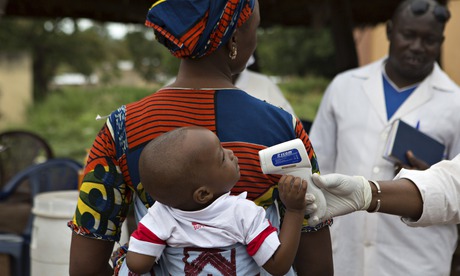
On Friday, Mali became the latest country to record a death, that of a two-year-old girl. She had travelled with her grandmother hundreds of miles by bus from Guinea via Mali’s capital to the western town of Kayes, where she was diagnosed on Thursday. The WHO said it was treating the situation in Mali as an emergency because the toddler had travelled for 1,000km on buses while showing symptoms of the disease, meaning that she was contagious.
Health workers are scrambling to trace hundreds of potential contacts to prevent the virus taking hold in Mali, which had put in place health checkpoints on its borders with Guinea. More than 40 people known to have come into contact with her have been quarantined.
Nigeria has recorded eight deaths and there has been one in the US. Senegal and Nigeria have successfully contained outbreaks and been declared free of the disease. This weekend, Ivory Coast was on alert after Guinean authorities informed them that a Guinean health worker had slipped surveillance and headed for the border after a patient had contracted Ebola.
Raymonde Goudou Coffie, Ivory Coast’s health minister, said the authorities did not know if the medic had Ebola but he had to be traced.


