Showing posts with label android. Show all posts

Thursday, 26 June 2014

Google Android software spreading to cars, watches, TV


SAN FRANCISCO: Google set out Wednesday to expand its Android empire beyond smartphones to cars, watches and televisions.

The technology titan laid out a sweeping Android vision at the opening of a sold-out developers conference in a keynote presentation streamed online to millions of people across the world.

"We are beginning to evolve our platforms beyond mobile," Android and Chrome teams chief Sundar Pichai said of how Google´s twin operating systems are being adapted to work with one another and with new types of computing hardware.

Google´s goal, according to Pichai, is to have its software serve be a foundation for applications, services or digital content delivered seamlessly across the increasingly diverse array of Internet-linked screens in people´s lives.

A new LG G smartwatch and a freshly-announced Gear Live smartwatch by Samsung that both work with the "Android Wear" platform will be available at the online shop Google Play by the end of the day Wednesday, according to Pichai.

On-stage demonstrations included ordering a pizza in seconds, fielding reminders and messages, and using voice commands on smartwatches. An eagerly awaited Moto smartwatch will join the Android Wear lineup later this year, according to Google.

"These are the first three watches, but there are more on the way," Pichai said.

An Android Auto version of the software tailored for cars, synching smartphones with in-dashboard screens and controls, is being shared with an array of auto makers and vehicles "should be rolling off lots" by the end of this year, according to Google. (AFP)

Wednesday, 5 March 2014

Samsung's Android 4.4 update reportedly puts an end to benchmark rigging


5292013115024PM_635_samsung_galaxy_s_4.png

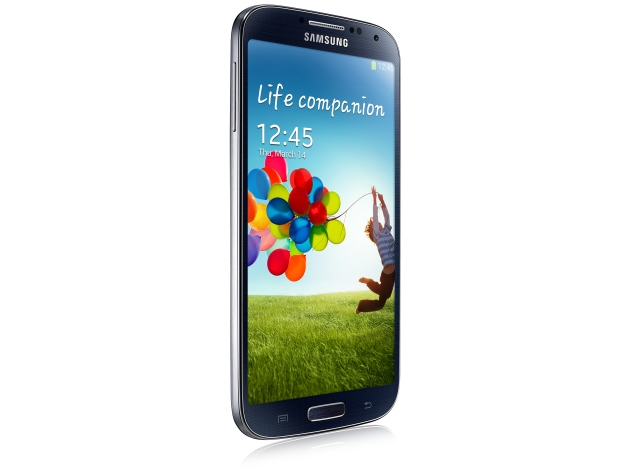
Last July, Samsung was caught in a bit of controversy when its flagship smartphone of the time, the Galaxy S4, was seen optimising its behaviour to score higher in commonly-used benchmarking apps.
According to the findings, the Samsung Galaxy S4 would expose higher-speed cores to certain applications like GLBenchmark 2.5.1, AnTuTu, Linpack, and Quadrant apps, while the power available to other apps would be capped at a lower speed, in an attempt to increase the battery life of the phone. This meant that the CPU power available to your typical apps was lesser than what you would expect based on the benchmarks score. Samsung allegedly did this 'optimisation' for GPU speeds as well.
However, it seems this practise has been put to an end with Samsung's Android 4.4 update for the Galaxy S4. According to a report by Ars Technica:
Moving to Android 4.4, that strange CPU activity stops happening. Every single benchmark we ran prompted variable-but-normal fluctuations in CPU speed based on actual activity. Speeds would ramp up for a couple of seconds while the app launched, but once it became idle, the speeds settled back down to where they would normally be.
Compare this to the behaviour in Android 4.3 "where all four cores go right to the maximum speed of 1.9GHz when a benchmark app is opened."
So has Samsung just hidden the new set of optimisations deeper in the code, or given up on the practice? Seems like it's the latter.
John Poole of Primate Labs, the developers of popular benchmarking app Geekbench told Ars, "I'm inclined to think that the change between 4.2.2 and 4.4.2 is due to Samsung tweaking the overall power and performance settings rather than a new harder-to-detect boost."
Similar optimisations were also noted in the Galaxy Note 3, so it would be interesting to see if a software update makes an impact on the phablet's performance in benchmarks as well.
To be fair to Samsung, it's not the only manufacturer that has been caught optimising its hardware for benchmarks. Anandtech noted last year that almost all manufacturers indulge in the practice. However, it seems that like almost everything else that it does, Samsung is (or at least was) better than others in this department as well.

Tuesday, 25 February 2014

Nokia Announces X, X+ and XL Android Phones

Nokia X feat Nokia Announces X, X+ and XL Android Phones
So you love Windows Phone, Android and Asha but can’t seem to decide which one to buy on a budget? Nokia has now solved your problem.
Rumours were right. We have been hearing about Nokia’s Android phones for years now but it is only now that they’re official. The three phones under the ‘X’ banner, the X, X+ and XL all run on open-source Android project version 4.1.2. This is an approach similar to the one used by Amazon for its Kindle tablets.
Nokia said that major apps will be available at launch for the Nokia X family of devices, including Facebook, LINE Free Voice and Messages, LINE Camera, LINE Bubble, Picsart, Plants vs. Zombies 2, Real Football 2014, Skype, Spotify, Swiftkey, Twitter, Viber, Vine and WeChat, among others.
Moreover, a first for Nokia customers around the world, BBM will also be available on the Nokia X family of devices in addition to Windows Phone.
It’s quite remarkable that the company has announced three phones, since all the leaks indicated a single, starter-range model.
Nokia Experience with Microsoft Services and Google’s Apps
The OS comes with a Windows Phone-like looks on its interface. The phone comes pre-loaded with Microsoft’s services like Skype and Outlook, as well as other applications such as Facebook.
Google has been deliberately side-lined from the entire experience.
Why Android then? That’s because of the apps, of course. Buyers will be able to side-load any Android APK on the phone, not just games and apps but also launchers.
Nokia’s Fastlane is also built-in into the phone’s interface. In case you don’t know, it gives you a track of everything going on in the background and your history.
Based on from what we’ve seen, the interface isn’t too smooth, which might’ve been due to the fact that the OS running is Android Jelly Bean, rather than the newer, more customized Android.

Nokia X and X+

The first phones of the line-up are the X and X+. Both are virtually the same, except that the latter has more internal, and expandable storage.
The design of the phones is undeniably Asha-inspired. Those vivid colours and replaceable backs clearly indicate the price-point and the target audience. Dual-sim connectivity further clarifies that.
The front is adorned with a 4″ display with 800 x 480 resolution. Below the display, you get a sole capacitive key, which takes you to the last screen on a single tap, or the home screen on a longer one.
Under the hood, you get a 1Ghz dual-core Snapdragon processor, along with 512 MB RAM and 4 GB of internal storage. The X+ will have expandable memory and 768 MB RAM. At the back is a sole 3 megapixel fixed-focus camera.
The phones are also quite compact, being 1 cm thick and weighing 129g, meaning they’ll fit in your palm quite comfortably. The 1,500 mAh battery will allow up to 10.3 hours of 3G talk time.
The price of the Nokia X and X+ are 89 Euros (12,800 PKR) and 99 Euros (14,200 PKR) respectively.
As expected, the phone will be released only in developing markets such as Asia including Pakistan, Nokia has told, in Q2.

Nokia XL

The XL is certainly a phone we weren’t expecting. It is the top-end smartphone which also runs on forked Android 4.1.2 but sits one slot above the Nokia X+, in the territory of the Lumia 520.
Coming with a substantially larger 5″ display with the same WVGA resolution, the Nokia XL features the same capacitive key at the bottom of the display.
Under the hood, you get the same 1Ghz dual-core Snapdragon processor with 4 GB internal storage but 768 MB RAM this time. At the back lies a 5 megapixel auto-focus camera with LED Flash, along with a 2 megapixel camera at the front.
The phone will hit emerging markets in Q2 of this year for 109 Euros or about 15,700 PKR.
With the X series, Nokia is giving its fan-base yet another option to join the family. Whether it will be successful remains a matter of debate and we can’t say anything for sure until we’ve tried it out for ourselves.
Here are specs for Nokia X Series Smartphones:

Nokia X Nokia X+ Nokia XL
Screen 4-inch IPS LCD, 800 x 480px 4-inch IPS LCD, 800 x 480px 5-inch IPS LCD, 800 x 480px
RAM 512MB 768MB 768MB
Storage Up to 32GB
MicroSD
Up to 32GB
MicroSD; 4GB card included
Up to 32GB
MicroSD; 4GB card included
Rear camera 3-megapixel fixed focus 3-megapixel fixed focus 5-megapixel with autofocus and flash
Front camera - - 2-megapixel
Processor 8225 Qualcomm Snapdragon1GHz Dual Core 8225 Qualcomm Snapdragon1GHz Dual Core 8225 Qualcomm Snapdragon1GHz Dual Core
Networks ESGM 850 / 900 / 1800 / 1900WCDMA 900 / 2100 ESGM 850 / 900 / 1800 / 1900WCDMA 900 / 2100 ESGM 850 / 900 / 1800 / 1900WCDMA 900 / 2100
Dimensions 115.5 x 63 x 10.4mm 115.5 x 63 x 10.4mm 141.3 x 77.7 x 10.8mm
Weight 128.66g 128.66g 190g
Standby time 2G = Up to 28.5 days3G = Up to 22 days 2G = Up to 28.5 days3G = Up to 22 days 2G = Up to 41 days3G = Up to 26 days
Talk time 2G = Up to 13.3 hours3G = Up to 10.5 hours 2G = Up to 13.3 hours3G = Up to 10.5 hours 2G = Up to 16 hours3G = Up to 13 hours

Monday, 24 February 2014

Android

Android

Android™ delivers a complete set of software for mobile devices: an operating system, middleware and key mobile applications.

Open

Android was built from the ground-up to enable developers to create compelling mobile applications that take full advantage of all a handset has to offer. It was built to be truly open. For example, an application can call upon any of the phone’s core functionality such as making calls, sending text messages, or using the camera, allowing developers to create richer and more cohesive experiences for users. Android is built on the open Linux Kernel. Furthermore, it utilizes a custom virtual machine that was designed to optimize memory and hardware resources in a mobile environment. Android is open source; it can be liberally extended to incorporate new cutting edge technologies as they emerge. The platform will continue to evolve as the developer community works together to build innovative mobile applications.

All applications are created equal

Android does not differentiate between the phone’s core applications and third-party applications. They can all be built to have equal access to a phone’s capabilities providing users with a broad spectrum of applications and services. With devices built on the Android Platform, users are able to fully tailor the phone to their interests. They can swap out the phone's homescreen, the style of the dialer, or any of the applications. They can even instruct their phones to use their favorite photo viewing application to handle the viewing of all photos.

Breaking down application boundaries

Android breaks down the barriers to building new and innovative applications. For example, a developer can combine information from the web with data on an individual’s mobile phone — such as the user’s contacts, calendar, or geographic location — to provide a more relevant user experience. With Android, a developer can build an application that enables users to view the location of their friends and be alerted when they are in the vicinity giving them a chance to connect.

Fast & easy application development

Android provides access to a wide range of useful libraries and tools that can be used to build rich applications. For example, Android enables developers to obtain the location of the device, and allows devices to communicate with one another enabling rich peer–to–peer social applications. In addition, Android includes a full set of tools that have been built from the ground up alongside the platform providing developers with high productivity and deep insight into their applications.

Overview

Building a better phone for consumers
Today, there are 1.5 billion television sets in use around the world. 1 billion people are on the Internet. But nearly 3 billion people have a mobile phone, making it one of the world’s most successful consumer products. Building a better mobile phone would enrich the lives of countless people across the globe. The Open Handset Alliance™ is a group of mobile and technology leaders who share this vision for changing the mobile experience for consumers.
Innovating in the open
Each member of the Open Handset Alliance is strongly committed to greater openness in the mobile ecosystem. Increased openness will enable everyone in our industry to innovate more rapidly and respond better to consumers’ demands. Our first joint project as a new Alliance is Android™. Android was built from the ground up with the explicit goal to be the first open, complete, and free platform created specifically for mobile devices.
Making the vision a reality
Android is not just a blueprint for the faraway future, but a complete platform that will give mobile operators, handset manufacturers, and developers everything they need to build innovative devices, software and services. We are committed to commercially deploy handsets and services using the Android Platform.

Sunday, 16 February 2014

Normandy may not be Nokia's only Android phone this year

Is Normandy just the beginning of Nokia's Android ambitions?

Rumors of the Nokia Normandy are heating up, but new whispers say it may only be the first of a whole pack of Android-powered phones from the Finnish firm.
Word from an Artesyn Technologies source is that says the phone company will have more Android phones coming this year, including several higher-end models.
Supposedly this new slew of phones powered by Google's mobile OS will be revealed sometime between May and June.
The source says the phones will come at different price points, but there's no word if it will be able to reach the Play Store unlike Normandy.

But phones may stay low end

Microsoft, which is in the final stages of finalizing its purchase of Nokia, has reportedly put its new acquisition through the chop shop and leaving it with the low-end Asha and feature phone departments.
Meanwhile, teams involved with Nokia's more notable hardware bits including PureView cameras, HAAC microphones, and ClearBlack displays have been moved to Redmond.
Taking these technology shifts into account, its possible that a majority of Nokia's Android phones could come as budget handsets with the Asha overlay - essentially a faux-smartphone tiled, touchscreen interface.

Nokia's Android pathfinder

Thus far, the only Android Nokia handset we've seen evidence for is Normandy. The phone will reportedly debut at MWC 2014 and it's already shaping up to be an abnormal little droid.
Instead of accessing the Play Store, Microsoft plans to supply the handset with its own apps, including Here Maps, MixRadio, and Nokia's own shop of Android apps.
It's already odd enough to see an almost-Microsoft-owned company putting anything but a Windows Phone OS on any handset let along multiple, but we'll let you know if we spot any other goodies from Nokia featuring Google's green bot.