Showing posts with label Leader. Show all posts

Monday, 23 June 2014

PTI leader asks KP govt to increase aid for IDPS

BANNU: Pakistan Tehreek-e-Insaf (PTI) Frontier Region Bannu, president Malik Mavez Khan and others said on Sunday that allocation of only Rs350 million from the Khyber Pakhtunkhwa government was a joke with internally displaced persons (IDPs) from North Waziristan.
Speaking at a press conference, they said Senior Minister Sirajul Haq should have allocated 30,000 per family for the IDPs instead of Rs3, 000. PTI members of provincial assembly (MPAs) and ministers should have come to Bannu to serve the IDPs.

The people of Bannu, Lakki Marwat and Dera Ismail Khan districts have vacated their residences and hujras and accommodated IDPs but the government failed to provide them financial and other facilities, they added.

They said the security forces should facilitate the IDPs at checkposts. People of various areas in Bannu district established camps for internally displaced persons (IDPs) and provided them support including portable water and food items.

Meanwhile, talking to reporters, Malik Amir Feroz Khan Wazir said that Mamandkhel tribe would provide assistance to the IDPs moving from North Waziristan Agency (NWA). Mamondkhel tribe had established camp for the IDPs at Azadmandi, he added.

“The people should generously cooperate with their brothers, who are in miserable condition and lacking water and food items as they had been forced to flee the area due to military operation,” he said, adding that people should vacate their hujras for IDPs.

Malik Ghulam Khan Wazir of Madakhel tribe and others asked the government to take measures for the rehabilitation of the IDPs on emergency basis. Camps should be set up in government schools in Bannu, Lakki Marwat, and Karak districts to accommodate the IDPs. The camps should be established near Bannu City as those in the remote areas lacked water, electricity and other facilities, he added.

Friday, 6 June 2014

Thailand’s junta detains anti-coup leader


BANGKOK: Thailand's junta said Friday that it had captured a fugitive anti-coup leader facing possible imprisonment, as the ruling generals seek to stamp out any criticism of their seizure of power.

Sombat Boonngamanong, who spearheaded an online campaign to stage illegal flashmob rallies against the military takeover, was arrested late Thursday in Chonburi province southeast of Bangkok, army spokeswoman Sirichan Ngathong said.

"We have a team who tracked him through the Internet," she told.

"He faces initial charges of violating an order to report to the junta," she said, an offence that carries a possible punishment of two years in prison.

Sombat was one of several hundred people -- including politicians, activists, academics and journalists -- summoned by the military following its May 22 coup.

Those who attended were detained in secret locations for up to a week and ordered to cease political activities.

Sombat, a prominent pro-democracy activist, refused to turn himself in, instead posting a message on Facebook saying: "Catch me if you can".

Since then he has urged followers to stage peaceful public demonstrations, flashing the three-finger salute from "The Hunger Games" films that has become a symbol of defiance against the junta.

A second military official said Sombat would be detained at an army facility for up to one week.

"During that time the military will question him on his movements, behaviour and his incitement," said the official, speaking on condition of anonymity.

Sombat would then face further interrogation by the police and appear before a military court, he added.

The activist is the leader of a faction of the "Red Shirts" movement, which broadly supports fugitive former premier Thaksin Shinawatra and his sister Yingluck, who was deposed as prime minister last month.

Ministers detained
A minister in Yingluck´s ousted cabinet who also refused to answer the summons was detained by soldiers in a dramatic swoop on a press conference late last month, and faces trial in a military court.

If convicted, ex-education minister Chaturon Chaisang could be imprisoned. He had used a press conference to criticise the coup minutes before being arrested.

Chaturon was due to appear in court on Friday for a second remand hearing.

Yingluck was herself summoned and held temporarily at an undisclosed location after the coup. The junta says she has since been released and allowed to return home although she remains under military supervision and has not been seen in public since.

Yingluck had faced nearly seven months of mass opposition protests leading up to the coup. Shootings and grenade attacks linked to the rallies left 28 people dead and hundreds wounded, including many opposition demonstrators.

The junta has imposed martial law, media censorship and a night-time curfew as part of what it says is an attempt to end years of political turmoil.

It mounted a show of military strength over the weekend, deploying soldiers to deter small but defiant anti-coup rallies that popped up outside shopping malls and near train stations in Bangkok.

Critics see the coup as a pretext for a long-planned power grab by the military-backed royalist establishment to purge politics of the influence of Thaksin, who was himself ousted by the army in 2006. The billionaire tycoon-turned-populist politician lives in Dubai to avoid jail for a corruption conviction. Thaksin or his allies have won every election in more than a decade, helped by strong support in the northern half of the country, including in 2011 under Yingluck.

The junta has said elections are not expected to be held for at least a year to allow political "reforms" including the drafting of a new constitution, despite international appeals for a return to democracy.

Monday, 2 June 2014

Taliban leader Mullah Omar says prisoner swap was “big victory”

KABUL: Taliban supreme leader Mullah Mohammad Omar on Sunday hailed the release of five senior insurgents in exchange for US soldier Bowe Bergdahl as a “big victory”.

“I extend my heartfelt congratulations to the entire Afghan Muslim nation, all the mujahideen and to the families and relatives of the prisoners for this big victory regarding the release of five Taliban leaders from the Guantanamo prison,” he said in a rare statement.

“I thank the government of Qatar, especially its Emir Sheikh Tamim bin Hamad (Al Thani), who made sincere efforts for the release of these leaders and for their mediation and for hosting them,” he added.

Mullah Omar was Afghanistan’s de facto head of state during their 1996-2001 rule over Afghanistan. He has continued to lead the group’s insurgency since they were ousted from power. The five transferred Taliban detainees have been named by the US State Department as Mohammad Fazl, Mullah Norullah Noori, Mohammed Nabi, Khairullah Khairkhwa and Abdul Haq Wasiq.

Sunday, 4 May 2014

Jang Group boycott by PTI chief a bid to fool nation: PPP leader

LAHORE: Hyder Zaman Qureshi — senior vice-president of PPP south Punjab — said the press conference by PTI chief Imran Khan in which he announced a complete boycott of Geo News and Jang Group after one year of the general elections was another gimmick to fool the nation.

In a statement issued on Saturday, Qureshi said the abrupt position vis-a-vis a media group and the former CJP almost a year after the general elections was shocking and equally disturbing to say the least as it raised many questions for the PTI brigade to answer.

He asked what had happened that forced Imran Khan to blast and target a media group and the former chief justice of Pakistan (CJP). “Does Khan Sahib think the people of Pakistan are so naive and ill-informed or does he think he can play around with their perceived political immaturity or a memory lapse phenomena?”

He asked why it took Imran 12 months to finally realise and identify the real bad guys behind the alleged election rigging and the warehouse where the punctures were sorted out. “Did Khan not know this when he was all praise for the former CJP in Court Room No 1 and rendering an unconditional apology to the former CJP and when he had to eat his own words,” questioned the PPP leader.

Qureshi further asked if Khan had not spotted the so-called rigging nexus (Geo and the former CJP) when he used to praise the media group and its coverage and programming content and independence in dozens of media programmes, including ‘Capital Talk’.

Qureshi also questioned the timing of the sudden move and said Imran opted to speak against the Jang Group at a time when it was being targeted and involved in an unpleasant situation with the armed forces that mattered for all Pakistanis.

“Did Khan realise and formulate conclusively that the media group was the real engine of rigging and for creating perceptions in favour of the PML-N in winning the elections,” the PPP leader asked.

Monday, 28 April 2014

PM to be blamed if Musharraf goes abroad: JI leader


PESHAWAR: Senior negotiator of the Tehrik-i-Taliban Pakistan (TTP) and leader of the Jamaat-i-Islami (JI) Prof Ibrahim on Sunday said that the prime minister would be held responsible if former president Pervez Musharraf left the country.

“He (Musharraf) never abided by the Constitution. He brought others’ war into Pakistan…. The law is (the same) for everyone, so it should be implemented indiscriminately,” Ibrahim told the concluding ceremony of the two-day training of JI workers at Al Markaz-e-Islami.

He said every Pakistani is equal before the law and Musharraf should not get special treatment as he was a known violator of the Constitution. About the treason case against Musharraf, the Taliban representative said that it was the responsibility of the federation to take the matter to its logical conclusion. No institution should back criminals, he added.

He reiterated that the federal government would be solely responsible if Musharraf was sent abroad.The JI leader said Musharraf brought the US war to Pakistan and if Gen Raheel Sharif wanted to restore the prestige of the army, he should not support a criminal and let the court decide his case.

He claimed Musharraf adopted a policy after 9/11 that created a civil war-like situation in the country.The JI leader said the talks between the committees and the Taliban leadership were to be held in a couple of days, during which the issue of the release of the sons of former prime minister Yusuf Raza Gilani and former Punjab governor Salmaan Taseer would be taken up. He added that they would ask the TTP to release the two if they were with them or to use their influence to secure their release if they were with other groups affiliated to them.

He urged the Taliban to extend the ceasefire and stop attacks on security forces to take the dialogue process forward.He called upon the government and security forces to take steps for the revival of the talks.

Ibrahim said that the government and the Taliban were yet to begin “real talks”, adding that “real talks” would begin after the TTP demands were received.He said that government, military and Taliban should move the dialogue process forward with sincerity.

He said in the talk process, there were problems from both sides. He said Taliban prisoners were yet to be released by the government.Ibrahim said both the government and the Taliban committees should have a meeting with the army chief, adding that the army should trust the government if they could not become part of the talks.

He said that the Taliban negotiators were trying to keep the dialogue process on track despite “some hurdles”.“The parliament in 2008 also endorsed talks but a US drone attack sabotaged the process,” he said.

He added: “Dialogue with the Taliban is the demand of all political forces. It was not a demand of the Jamaat-i-Islami (JI) only.”He said peace could be restored through dialogue as a military operation was no solution to the problem.

He said the Taliban would accept the Constitution in its original spirit. He alleged that the Constitution had not been followed by any leader of Pakistan since its independence.He said the dialogue process had not yet started officially as the council of the TTP and the federal government showed reluctance about meeting directly.

He made an appeal to the Taliban to stop attacking defence institutions. He said the army should also not resort to aerial strikes.He said intelligence agencies were supposed to keep a check on the activities of the enemies. He said people were not pointing the finger at the intelligence agencies without any reason. The JI leader said that it was said in the courts that missing people were in their custody.

“We have been faced with a civil war for the last over one decade. The JI has been saying since day one that the fighting between the army and the people is neither in favour of the army nor the nation,” the JI leader added.

Tahir Khan Azikhel adds from Batkhela: Meanwhile, Yousaf Shah, another TTP negotiation committee member, said a separate committee would be set up to probe the “conspiracies” to sabotage talks between the government and Taliban.

Speaking at a press conference here, he said a venue would be decided for holding the third round of talks shortly.He said the government handed over 13 prisoners to the committee as a goodwill gesture, adding that practical steps would be taken to implement decisions for reconciliation.

Yousaf Shah said the people of Pakistan and Khyber Pakhtunkhwa heaved a sigh of relief after the ceasefire between the armed forces and Taliban.He said, “We have been saying since the very first day that the use of force is not a solution to resolving the conflict.”

He alleged some elements had been active in creating hurdles to derail the dialogue between the government and TTP committees, but they would not succeed in it.He said the “agents of the US, India and Afghanistan” were out to sabotage the talks, adding the TTP and government were aware of these conspiracies.

He alleged leaders of some political parties who were insisting on winding up the negotiation process and launching operations were not sincere to the national cause.He maintained that countering terrorism was a national issue and politicians should help the committees succeed in achieving the objective.

Friday, 11 April 2014

Indian party leader sparks backlash over rape remarks


NEW DELHI: The mother of a student who was fatally gang-raped on a bus led the outrage Friday against an Indian political leader who described three convicted multiple rapists as "boys" who had made "mistakes".

During a rally in the state of Uttar Pradesh on Thursday, Mulayam Singh Yadav said his Samajwadi Party would try to change the law on punishments for rapists after India´s ongoing elections as he spoke out in defence of three men who have been sentenced to death for repeat sexual assaults.

"Three poor fellows have been sentenced to death. Should rape cases lead to hanging?" said the 74-year-old Yadav, whose party governs the electorally crucial state of Uttar Pradesh.

"They are boys, they make mistakes," he added in reference to the three men aged 28, 21 and 19 who were sentenced in Mumbai last week for their part in two gang-rapes.

They were the first death sentences to be handed down for multiple sex attacks since the law was toughened following the outrage over the December 2012 attack on the bus in New Delhi.

The mother of the 23-year-old victim, who died of her injuries in a Singapore hospital two weeks after the assault, called Yadav a "disgusting and shameless" politician and urged voters to reject leaders who "don´t understand the torture women go through".

"His comments hurt us so much," the mother, who cannot be named for legal reasons, told.

"Every day women get raped and they are all mistakes? He talks about doing away with the death sentence for rapists but parents like us feel even death is not enough for rapists. They deserve worse."

Yadav´s remarks sparked a backlash on social media where #backingrapists and ´Mulayam Singh´ were top trending topics on Twitter.

Political parties and women´s rights groups poured scorn on the 74-year-old ex-wrestler over his "misogynistic" comments and demanded an apology.

Friday, 4 April 2014

Afghans see hope in chance to choose new leader


KABUL: Two Afghan women shrouded in black emerged from a campaign rally carrying bundles of sticks with pieces of torn posters still attached. The women weren't intending to knit back together what pictures remained of the presidential hopeful. They simply needed firewood to heat their home.

Afghanistan's enduring poverty - and corruption - is making it easier for the Taliban to make inroads nearly 13 years after a U.S.-led invasion ousted them from power.

The militants have vowed to disrupt Saturday's nationwide elections with violence, and recent high-profile attacks in the heart of Kabul are clearly designed to show they are perfectly capable of doing just that.

On Friday, a veteran Associated Press photographer was killed and an AP reporter was wounded when an Afghan policeman opened fire while the two were sitting in their car in the city of Khost, in eastern Afghanistan. The two were at a security forces base, waiting to move in a convoy of election workers delivering ballots.

If voters turn out in large numbers and the Afghans are able to hold a successful election, that could undermine the Taliban's appeal by showing democracy can indeed work.

With President Hamid Karzai constitutionally barred from a third term, Afghans will choose a new president in what promises to be the nation's first democratic transfer of power. As international combat forces prepare to withdraw by the end of this year, the country is so unstable that the very fact the crucial elections are being held is touted as one of the few successes in Karzai's tenure.

Nearly 200,000 Afghan security forces planned to fan out on Saturday to protect polling stations and voters. On Friday evening, mobile phone messaging services stopped working in the capital, Kabul, in what appeared to be a security measure by authorities to prevent militants from using messages for attacks.

Three men are considered top contenders in the race - a major shift from past elections dominated by Karzai, who has ruled the country since the Taliban were ousted in 2001. That has presented Afghans with their first presidential vote in which the outcome is uncertain.

There do not appear to be major policy differences toward the West between the front-runners - Abdullah Abdullah, Karzai's top rival in the last election; Ashraf Ghani Ahmadzai, an academic and former World Bank official; and Zalmai Rassoul, a former foreign minister. All have promised to sign a security agreement with the United States that will allow thousands of foreign troops to remain in the country after 2014 - which Karzai has refused to do. The candidates differ on some issues such as the country's border dispute with Pakistan. But all preach against fraud and corruption and vow to improve security.

The candidates have stumped for votes with near-daily debates and rallies across the Texas-sized country, a far greater level of campaigning than in the past, when certain blocs of voters were largely taken for granted in a patronage system. They also have named running mates including warlords, leaders from rival ethnic groups and in some cases, women. None is expected to get a majority needed to secure a win outright, so a runoff between the top two vote getters is widely expected.

"The election excitement is being felt all over the place," said Aimal Jan Ghafoori, who worked at a voter registration center in the southern city of Kandahar. "It's really good to see this change. I hope this change helps in changing the fate of our country soon enough."

He said barely three dozen people showed up to register each day in 2009, when massive vote-rigging marred Karzai's re-election, while as many as 300 lined up daily to beat Tuesday's deadline to register for this year's elections for president and provincial councils.

But the attacks in Kabul over the past few weeks are threatening to scare voters away from the polls as Afghans worry security forces unable to guard areas previously considered safe won't be able to protect them on election day.

In Friday's attack in Khost, a unit commander named Naqibullah walked up to the car with the AP photographer and reporter, yelled "Allahu Akbar" - God is Great - and opened fire on them in the back seat with his AK-47.

Anja Niedringhaus, 48, an internationally acclaimed German photographer, was killed instantly, while Kathy Gannon, an AP correspondent who for many years was the news organization's Afghanistan bureau chief and currently is a special correspondent for the region, was shot twice and later underwent surgery. She was reported as being in stable condition.

Security forces have been on high alert since a suicide bomber struck the entrance of the heavily fortified Interior Ministry in Kabul on Wednesday, killing six policemen. Police are searching cars and checking ID cards at checkpoints. Streets in the capital are unusually empty of traffic as many people stay home for fear of more bloodshed.

"I have no interest in going to vote on election day," said bank employee Jawad Furmoli. "People are very sad and it will be a dangerous day."

"If the situation continues like this, I don't think anyone will go to the polling stations," said Wafaq Arya, who was near the Interior Ministry when it was attacked on Wednesday. "It will badly affect the elections."

The three front-runners all have expressed concern about fraud in the balloting, particularly government interference.

International officials say a level of fraud is to be expected but note that Afghan electoral officials have learned from the past and implemented strict protocols to minimize it. That includes bar codes on the ballot boxes being delivered to nearly 6,500 polling centers in all 34 provinces and plans to tally the results immediately after the vote closes and post a copy of the results at each center.

Graeme Smith, an analyst with the Brussels-based International Crisis Group, said all signs pointed to a heavy turnout despite fears of violence, in part because voters actually feel like they have a choice.

"The indications are that people are going to vote, at the very least tribes and local strongmen are going to be able to muster votes," he said. "The fact that it's a horse race might bring out the vote."

Afghans interviewed at various campaign rallies and elsewhere are largely united about one thing: They are disappointed at the lack of progress after more than 12 years of war. The new president will face high expectations to alleviate poverty and clean up the government in a country that Transparency International last year ranked among the three most corrupt in the world alongside Somalia and North Korea.

Many Afghans also are worried about the impending withdrawal of international combat forces that is putting billions of dollars in international reconstruction aid at risk.

The U.S. and its allies, meanwhile, are hoping for a chance to reset relations that have been badly damaged following several disputes with Karzai, including his refusal to sign the security pact.

International forces are taking a backseat in the elections, although they have provided air support to help the Independent Election Commission deliver at least 400 tons of ballots and other election materials to remote provinces. Donkey caravans often take it from there, hauling boxes along treacherous mountain paths.

Brig. Gen. Daniel O'Donohue, the chief operations officer for NATO-led forces, expressed confidence that the Afghan security forces were prepared to secure voters. He acknowledged the Taliban remain able to stage brazen assaults that draw headlines but insisted the militants will be unable to derail the voting.

"All they can do is try and act as a spoiler," he said this week during an interview on the vast military base on the edge of Kabul. "Our estimate of it is they have the capability to do these high-profile attacks but they don't have the ability, you know, to contest the Afghan security forces or to affect the essential security that they are providing for the election."

Tuesday, 1 April 2014

Karachi: Banned group local leader killed in police encounter


KARACHI: A local leader of a banned outfit has been killed in an alleged police encounter that took place in the limits of Sohrab Goth police station, here on Tuesday.

According to police, the deceased has been identified as Muhammad Ameen.

The accused had been staying in Karachi since Swat operation, the police added.

Sunday, 30 March 2014

MQM leader jailed for fraud not mortgage

LONDON: Imbisat Malick, a Muttahida Qaumi Movement’s London-based Central Co-ordination Committee member, was jailed because of his involvement with the MQM and the fraud for which he was prosecuted came to light during a police investigation into the finances of the MQM, court papers obtained by The News confirm.

Some MQM leaders have gone on record to state that Imbisat Mallick has been jailed for 21 months over a mortgage fraud that was his personal matter, but the court papers available with this correspondent unambiguously state that “the fraud came to light during a police investigation into the finances of the MQM, a Pakistani political party based in the UK, the investigations has shown that members of the organisation have access to large cash balances and have an extensive property portfolios.”

In cases where mortgage frauds are involved, police rarely get involved as banks pursue such civil cases, but Mallick’s conviction is unique in the sense that around 15 members of the Counter Terrorism Command Unit officials – the same unit that’s responsible for the murder investigation of Dr Imran Farooq and the associated money-laundering cases—raided the house of Imbisat Mallick under the Police and Criminal Evidence Act (PACE), after executing such warrants. The court papers clearly show that Mallick’s mortgage was 100 percent up-to-date. The court papers confirm that Mr Mallick, who was sentenced at Isleworth Crown Court here on 13th of January this year, didn’t cause loss to the lender—the Santander Bank—and used the house to live with his family and was not speculating the sale of the house. Mallick’s lawyers presented in the court the letter from the Santander Bank of 3rd January 2014, advising change to monthly mortgage and giving the details of the future payment. They demonstrated that the bank didn’t raise any concerns, was happy to carry on doing business with Mr Mallick and didn’t object to the mortgage arrangement with Mr Mallick.

The court papers show that the Scotland Yard detectives raided the property of Mr Mallick on 17th of July 2013 – roughly a month after the detectives raided the residential properties of the MQM chief Altaf Hussain and his cousin Iftikhar Hussain Qurasihi. On 24th of June, the police arrested Quraishi, 52, at the Heathrow Airport when he was returning to London after attending a wedding in Canada. The Counter Terror unit executed a dawn raid at Mr Mallick’s Northwood home on 17th July. The police took away mobile phones, navigation system, computers, multi media laptops, data storage devices and almost all documents found in the house. The News has confirmation that the detectives, after arresting Mr Mallick, searched the property for a day.

According to sources, Mr Mallick was going to plead not guilty because it was a broker who had originally arranged all the paper work to obtain mortgage for Mr Mallick and for this, he was paid in the tune of about 6 thousand GBP. But the solicitor advised Mr Mallick that on prima facie the charges of mortgage fraud in a court before the jury could lead to wider exposure of the matters relating to the MQM where further witnesses could have been called to explain the property portfolios and the large cash balances. The prosecution paper clearly state that Mr Mallick is a central MQM leader and also son-in-law of Muhammad Anwar, one of the most senior MQM leaders and a key adviser to the party on international affairs.

The court papers say that Imbisat Mallick’s father-in-law is MQM’s senior leader and that he would be able to “purchase the house for cash if he was inclined to do so”.

The court papers show that the prosecution made a witness statement in support of an application for a restraint order under Section 41 Proceeds of Crime Act 2002. This application in the case of Mr Mallick means that his sentencing is linked with the wider money-laundering probe because no cash was found during raid on Mallick’s hosue.

The News is aware that Mr Mallick was advised by his solicitors that a trial could open a Pandora’s Box that could lead to several MQM figures also standing in the court for witness statements and other forms of questioning. The source confirmed that Mr Mallick pleaded guilty to avoid that situation and therefore, he has become the first martyr for the party in the multiple active probes.

As mentioned above, several leaders of the MQM are distancing themselves from Mr Mallick that his conviction is a personal matter, but his case is a test for the MQM and throws up a dilemma for the party as in whether the party acknowledges his huge sacrifice or tries to distance itself from one of their closest associates who now finds himself behind the bars for his very involvement in the party affairs.

The court papers show that Regina Vs Waya mortgage fraud precedent was used in the Isleworth Crown Court to sentence Mr Mallick but Mr Waya, in a similar mortgage fraud case, was sentenced to 80 hours of community service reflecting the judge’s view of the relatively low level for his culpability. The judge in the case of Mr Waya went on to say that “he was not guilty of a serious mortgage fraud, involving dishonest overvaluation of property. There was no loss to the mortgage lender.”

The papers seen by The News show that the case involving Mallick relates to a property in London’s Northwood area, which is subject to a mortgage in the sum of £399,734 and the approximate value of the property is £637,000.

The papers show that “the benefit will be the amount of equity in the property that can be attributed to the amount gained from the fraud.

The present value of the house is approximately £637,000 so the equity is around £127,000. The mortgage of £434,945 represents 85 percent of the purchase price. The benefit gained by the fraud is therefore 85 percent of £127,000 which is £107,950.”

Wednesday, 26 March 2014

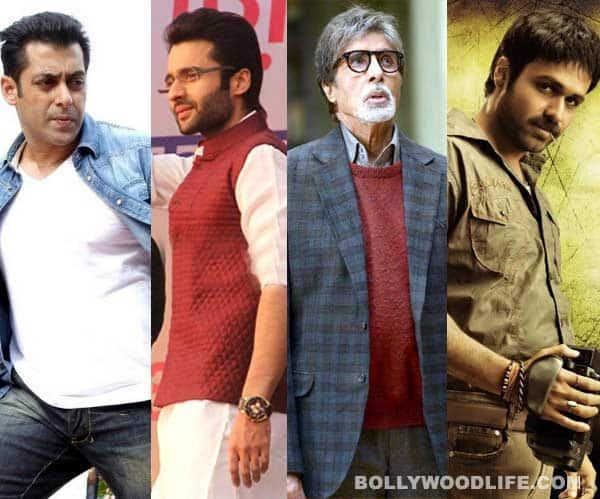
Amitabh Bachchan, Salman Khan, Emraan Hashmi or Jackky Bhagnani: Who is an inspiring leader?


Amitabh Bachchan, Salman Khan, Emraan Hashmi or Jackky Bhagnani: Who is an inspiring leader?

The general elections are just around the corner. Young India is in search of dynamic leaders who can pull the country out of the relentless social and economic gloom with their awe-inspiring leadership skills. Cinematically speaking, many B-town heroes have given us hope with their incredible endeavours. Take a look at these stalwarts from reel life and tell us who can become a role model in real life too when it comes to inspiring young minds and bring about a much-needed change

With election being the buzz word, our B-town movie makers are eager to cash in on anything that can bring about a social change, for the better. From the baap of Bollywood Amitabh Bachchan using his supernatural prowess in his forthcoming movie Bhoothnath Returns to contest an election to bring some order in the politically and morally corrupt society, young lad Jackky Bhagnani is eager to introduce a movement of sorts to place India on the global map and give the country its rightful due. And then there are two rookies- charged with tremendous confidence and incredible passion-who are all set to do a pardaahfash and to set the country in order with their might as journalists. Yes, Atul Agnihotri’s forthcoming movie O Teri will see duo Bilal Amrohi and Pulkit Samrat unearthing some shocking scams.
Take a look at these onscreen leaders who gave us a cinematic hope with their heroism and tell us who inspired you the most?
Amitabh Bachchan in Bhoothnath Returns: With his towering personality, megastar Amitabh Bachchan will unleash his funny as well as intimidating streak in the sequel to 2008 horror-comedy Bhoothnath. As the friendly neighbourhood ghost, Big B’s Bhoothnath will be seen fighting the elections. His helpful presence will be seen only by children while adults remain blind to his magnanimous personality. Mr Bachchan will employ his rich baritone, his tall frame and the generosity of his ‘spirit’ to best effect to deliver justice.
Jackky Bhagnani in Youngistaan: The young dude brings the energy and perspective of the youth with his personality for positive changes India has been craving for long now. A young and dynamic leader with a vision to build India is what the country needs and Jackky is playing a strong character in his forthcoming release Youngistaan. The lad wants to put India on the map with his zest and meticulous planning.
Amitabh Bachchan in Satyagraha: The veteran played a Gandhian in Prakash Jha’’s political drama Satyagraha. Big B might have played a traditionalist who walks the path of truth and honesty, but he is equally modern with his approach when it comes to fighting against the system to clean up the mess. He uses the power of social media to spur a political movement that snowballs into a corruption hatao aandolan. But the path to a clean and corruption-free state is straddled with many challenges, dirty politics and blood-bath. And yet the veteran actor chooses to fight till he takes the battle to its logical conclusion.
Salman Khan in Jai Ho: The Being Human actor upholds some really inspiring qualities in real life. We all know that Salman is kind, generous and compassionate. The 48-year-old took a leaf out of the book on his own life, so to say, to portray an ex-army officer in Jai Ho who is on a mission to create a chain of goodness for the betterment of humanity.
Emraan Hashmi in Shanghai: Dibaker Banerjee’s Shanghai traced corruption in India at its regressive best, masquerading in the garb of economic progress. Emraan Hashmi played the pot-bellied, 30-year-old Rajput struggling to make a life, resorting to the easy way out as a porn videographer. But the sudden transformation in his grey character-when Hashmi decides to take on the system with all his worth was jaw-dropping. It simply showed the might of a commoner who can turn things around if something within him gets stirred.

Friday, 7 March 2014

EU freezes assets of ousted Ukrainian leader, Yanukovych and 17 others

European Union (EU), a 28-nation bloc on 6 March 2014 froze the assets of Viktor Yanukovych, the ousted Ukrainian leader and Mykola Azarov, the ex-premier. The assets of other 16 former ministers, businessmen and security chiefs were also frozen. The assets were frozen on grounds of fraud as the Ukrainian officials suspected the misuse of state funds and violation of human rights.

This decision was taken by the leaders of European Union during an emergency summit held in Brussels. The summit was held to discuss the crisis in Ukraine’s Black Sea peninsula of Crimea, which at present is under de-facto control of pro-Russian forces.

Earlier, the foreign ministers of EU on 20 February 2014 decided to apply sanctions to any Ukrainian officials who were deemed as responsible for violence against protesters. But the final decision was made during the emergency talks.

These 18 people were listed in the official journal of European Union and these people have been targeted as the people who are subject to criminal proceedings in Ukraine to investigate crimes in connection with the embezzlement of Ukrainian state funds and their illegal transfer outside Ukraine.

These sanctions will be in effect for an initial period of 12 months with an aim to enable Ukraine’s new authorities to recover the frozen funds. Similar moves were also announced by Austria. Swiss authorities have also ordered freeze of assets of all the 18 people including Yanukovych and Oleksandr. Liechtenstein has also frozen the bank accounts of the same officials.

In another movement, MPs in the southern Ukrainian region of Crimea have also voted to formally become part of the Russian Federation.

Monday, 3 March 2014

Deposed Ukrainian leader asks Putin for troops: Russia


imageUNITED NATIONS: Ukraine's deposed president Viktor Yanukovych formally asked Moscow to deploy Russian troops to re-establish law and order in his country, Russia told the UN Security Council on Monday.
Russia's ambassador said Yanukovych sent the written request to President Vladimir Putin on Saturday, addressing the third round of emergency talks on Ukraine in New York in four days.
Vitaly Churkin said what he called "radical extremists" had seized power in Ukraine and -- incited by Western powers -- were threatening the lives and legitimate interests of Russians.
Quoting from Yanukovych's letter of which he flashed up a photocopy for all to see, Churkin said: "Ukraine is on the brink of a civil war. In the country there is chaos and anarchy.
"Under the influence of Western countries there are open acts of terror and violence. People are being persecuted for language and political reasons.
"So in this regard I would call on the president of Russia, Mr Putin, asking him to use the armed forces of the Russian Federation to establish legitimacy, peace, law and order, stability and defending the people of Ukraine," he read.
Russia had called Monday's emergency session of the 15-member Security Council, where Churkin told reporters he would lay out in "considerably more detail" Russia's position on Ukraine.
But his short address provoked stinging rebuke from the British, French and US ambassadors who said Russia was fabricating excuses to justify its flagrant violations of international law.
US ambassador Samantha Power said Russia's claims had no basis in reality and that there was no evidence of violence against Russian or pro-Russian communities in Ukraine.
"Russian military action is not a human rights protection mission. It is a violation of international law," she said.
"Russian mobilization is a response to an imaginary threat... Military action cannot be justified on the basis of threats that haven't been made and aren't being carried out," Power added.
British ambassador Mark Lyall Grant concurred, heavily criticizing Russia's "flagrant breach of international law," and violation of Ukraine's sovereignty and territorial integrity.
"We can see absolutely no justification for these actions."
The interim Ukrainian authorities that took over when Yanukovych fled to Russia late last month, said earlier Monday that Russian troops were still pouring into Crimea.
On Saturday the UN Security Council was mired in similar disagreement when Western nations urged Moscow to pull back its military reinforcements from the strategic Black Sea peninsula of Crimea which has a majority ethnic Russian population.
According to a diplomat on the council, Russia "was taken aback" on Saturday and wanted the follow-up session on Monday "to give its read on events, especially as things go south on the ground."

Friday, 28 February 2014

Ukraine leader asks Putin to stop ’aggression’ in Crimea


imageKIEV: Ukraine's interim president Oleksandr Turchynov on Friday appealed to Vladimir Putin to stop Russia's "naked aggression" against the country and withdraw from the flashpoint Crimea peninsula.
"I personally appeal to President Putin to immediately stop military provocation and to withdraw from the Autonomous Republic of Crimea. It's a naked aggression against Ukraine," he told reporters after additional Russian forces were reported to have landed in Crimea, where Moscow has maintained a military base for years.

Wednesday, 26 February 2014

As Ukraine Crisis Rumbles, Georgia Leader Visits U.S.

WASHINGTON — Prime Minister Irakli Garibashvili of Georgia met with Secretary of State John Kerry on Wednesday to discuss ways to develop his nation’s economy and reinforce its pro-Western path. But the tumultuous events in Ukraine, and Moscow’s decision to send a message by conducting a surprise military exercise in western Russia, have cast a shadow on the Georgian leader’s visit here.
In an interview on Tuesday night, Mr. Garibashvili reflected on Russia’s role and developments in Ukraine, which Georgia hopes will now move toward greater integration with Europe.
Georgia has been pursuing membership in the European Union and NATO, a bid it has reinforced by sending troops to participate in the multinational force in Afghanistan. But Georgia has been powerless to stop Russia’s muscle flexing closer to home, activity that Mr. Garibashvili said had accelerated as soon as the Winter Olympics were over.
Mr. Garibashvili said Russia had resumed work on barbed-wire fences in the breakaway region of South Ossetia. Georgia, the United States and most of the world consider South Ossetia to be Georgian territory. Russia, which sent troops to occupy the area during its 2008 war with Georgia, considers South Ossetia an independent country.
“They are installing these fences, and they are calling it border,” Mr. Garibashvili said. “They suspended these actions in December, and they renewed right after the Sochi Olympic Games.”
Mr. Garibashvili said that Georgia would never use force to recover South Ossetia and Abkhazia, another breakaway area, but expressed hope the regions would voluntarily rejoin Georgia after it was further integrated with Europe.
“They will have a very clear picture, maybe in five years, maybe in 10 years, and they will see the difference,” Mr. Garibashvili added. “And they will have to decide whether they will want to live in the darkness or live in a brighter future.”
Events in Ukraine, another former Soviet republic struggling to find its own way, were also on Mr. Garibashvili’s mind.
As far back as Eduard Shevardnadze, the former Soviet foreign minister who served as president of a newly independent Georgia from 1995 to 2003, Georgia leaders have said a Ukraine that sought its future in Europe would help ease the process for Georgia.
Georgian leaders plan to sign partnership and free-trade agreements with the European Union in August, a prospect likely to further irritate Russia.
“They’re expecting Russian pressure between now and then not to go forward,” said Kenneth S. Yalowitz, a former diplomat who served as the American ambassador in Georgia from 1998 to 2001. “If Ukraine is going forward with the E.U. it is going to make it a lot easier for Georgia.”
In his interview, Mr. Garibashvili said that he hoped Ukraine would return to its “European choice” by joining Georgia and Moldova in signing a partnership agreement with the European Union—and that the West would reciprocate as well.
“I think Ukraine has quite serious economic problems. And I think the European Union, together with I.M.F. and with other international institutions, should find a solution now to solve their problems,” he said. “It all matters how fast they will do this. I heard that the European Union offered 20 billion euros. I think they should be very flexible.”
During his trip to Washington, Mr. Garibashvili has sought to strengthen ties by meeting with President Obama and Vice President Joseph R. Biden Jr. and by giving a well attended speech to the Atlantic Council, a nonpartisan Washington research organization.
Balancing his interest in joining NATO with his efforts to improve ties to Moscow remains challenging, at best. Georgia has argued that tying its economic policy to the West would not be damaging to Russia, but there is nothing to indicate that Russia President Vladimir V. Putin is prepared to accept that argument.
“We have to persuade them,” Mr. Garibashvili said of the Russians. “We have to try. We have to show them the reality. Russia should be interested in having a reliable and predictable neighbor country.”
Asked if Russia’s loss of influence in Ukraine might make Moscow toughen its policy toward Georgia, Mr. Garibashvili gave a somewhat philosophical reply.
“Nothing is excluded,” he said. “Georgia has already experienced that pressure from Russia when we had this war in 2008. Twenty percent of our terroritory is occupied, so what else can be done? Now Russia does not have too many economic leverages on us.”
Ukraine, he said, is a different story. “Ukraine is dependent on Russia, and Russia can play with this.”