Showing posts with label was. Show all posts

Tuesday, 1 July 2014

John Kerry says U.S. war on Iraq was serious mistake


BEIJING: US Secretary of State John Kerry admitted that the Iraq war was a serious mistake for which the sufferings continued even today, Geo News reported on Tuesday.

In an interview to Chinese news agency, US Secretary of State, John Kerry said he had termed this decision of former President George Bush going for war on Iraq a grave mistake.

Even today, the region's many problems are caused by the Iraq war, the U.S. is trying to address, citing example of President Obama’s pulling out the troops from Iraq, he said.
The statement of the US Secretary of State has come at a time when Iraq has already suffered an irreparable loss and the country is bleeding in a civil war.

Sunday, 8 June 2014

Ban on Geo excessive, one-day suspension was enough: Altaf


LONDON: Altaf Hussain, the exiled leader of the Muttahida Qaumi Movement (MQM), has strongly condemned the suspension of Geo’s licence saying that the decision by Pemra was excessive as the ban could have perhaps been slapped “for a day”.
He suggested that the Geo licence suspension was an attack on the free press and expressed his support for the freedom of the media.

He said that he respected and trusted the British justice system and hoped that justice will be done in the case of the money-laundering probe for which he was arrested and released on police bail.

Speaking live from the International Secretariat soon after his release from the Southwark Police Station, Hussain, 60, who has been living in the UK since 1991, said that he would not comment on his case because it is with the authorities but said he hoped justice would prevail and that he respected “British laws and the judicial system”.

Altaf Hussain was arrested on Tuesday morning by Scotland Yard from his home on suspicion of money-laundering but he spent three nights in the Wellington Hospital due to his ill health.

Scotland Yard said in a statement: “The 60-year-old man arrested on Tuesday 3 June on suspicion of money laundering has been released on police bail to a date in July pending further enquiries. Police bail is the term used when a person arrested in connection with a criminal offence is released from police custody whilst the police investigation continues and until they are next required to appear at a police station. When a person is released on police bail they are required to return to the police station at a specific date and time”. The news of Mr Hussain’s release prompted celebrations across the world wherever his party has a presence, including in London. On the Borough High Street, traffic came to a halt as Hussain came out of his car’s sun roof and waved to his supporters who had been waiting outside the police station for over 10 hours.

“Those who stick with what is just never have to face defeat. I believe in Imam Hussain (AS) who mounted a struggle for the right reasons in Karbala against the forces of Yazeed. Like a true Hussaini who believes in the cause of justice and fairness, I will never surrender even if it means sacrificing my life for the fulfillment of a right cause. I will never stop speaking the truth, be it before the Pakistani authorities or the British. My mission will continue regardless of what happens to me,” a defiant Hussain told his charged supporters, who kept raising slogans at the International Secretariat at regular intervals to express their support to Mr Hussain.

Hussain said he never retreated from his stance and he would continue to say what is right, irrespective of how tough the time may be. “Every person deserves the right of equivalent treatment…. I did not bow before forces even when I was arrested in 1992,” he said.

Altaf Hussain thanked the staff at the Wellington Hospital and the Metropolitan police staff for congenial treatment during his stay at the hospital and police custody. “The police attitude was hospitable both in the lockup and at hospital and I am thankful to them for this.”

Altaf Hussain expressed his gratitude for “those who raised their voice over his arrest”. Hussain mentioned all political parties, minus the PTI, and thanked them for their support but praised PM Nawaz Sharif for showing leadership and arranging consular access for him.

Altaf Hussain was welcomed at the International Secretariat by Dr Asim Hussain and Wajid Shamsul Hasan. A delegation of the All Pakistan Muslim League (APML) headed by Ifzaal Siddiqui remained at the police station and at the MQM Secretariat to show support on behalf of former President Pervez Musharraf.

Altaf began his speech with recitation from the Holy Quran. He added: “The greatest strength for people who struggle against injustices is patience. It is the patience that enabled the Ahle-Bait to prevail over the forces of Yazeed forever. Hazrat Imam Hussain (AS) sacrificed his life but did not bow his head before the forces of Yazeed. When my brother and nephew were arrested, I did not beg for their lives. I accept martyrdom like Imam Hussain (AS).”

Hussain said that his legal team was looking into the allegations of money-laundering and will be formulating a response as per requirements but refused to comment any further on this.

Friday, 6 June 2014

Captured US soldier was treated well: Taliban


KABUL: The Taliban said Friday that US Sgt. Bowe Bergdahl was treated well during the five years they held him captive and was even allowed to play soccer with the men holding him.

The spokesman, Zaibullah Mujahid, told The Associated Press by telephone that Bergdahl was held under "good conditions," and was given fresh fruit and any other foods he requested.

"You can ask him in America about his life (in captivity). He will not complain," Mujahid said.

He said Bergdahl was held in different locations inside Afghanistan, without providing further details.

He said the soldier enjoyed playing soccer as well as reading, including English-language books about Islam.

Since Bergdahl´s release senior officials, including President Barack Obama, have said the prisoner swap that involved the release of five high-profile Taliban detainees from Guantanamo Bay, and which has caused a furor in the United States, was hastened by concerns the Army sergeant´s physical health was deteriorating.

But the Obama administration later told senators it did not notify Congress about the pending swap because of intelligence the Taliban might kill Bergdahl if the deal was made public, congressional and administration officials said Thursday.

Under the deal, five Taliban militants were released from Guantanamo and flown to Qatar, where they are to remain for a year under conditions that have not been spelled out in public.

A federal law requires Congress to be told 30 days before a prisoner is released from Guantanamo, but Obama administration officials said it did not apply in what they deemed an emergency situation. (AP)

Monday, 2 June 2014

Taliban leader Mullah Omar says prisoner swap was “big victory”

KABUL: Taliban supreme leader Mullah Mohammad Omar on Sunday hailed the release of five senior insurgents in exchange for US soldier Bowe Bergdahl as a “big victory”.

“I extend my heartfelt congratulations to the entire Afghan Muslim nation, all the mujahideen and to the families and relatives of the prisoners for this big victory regarding the release of five Taliban leaders from the Guantanamo prison,” he said in a rare statement.

“I thank the government of Qatar, especially its Emir Sheikh Tamim bin Hamad (Al Thani), who made sincere efforts for the release of these leaders and for their mediation and for hosting them,” he added.

Mullah Omar was Afghanistan’s de facto head of state during their 1996-2001 rule over Afghanistan. He has continued to lead the group’s insurgency since they were ousted from power. The five transferred Taliban detainees have been named by the US State Department as Mohammad Fazl, Mullah Norullah Noori, Mohammed Nabi, Khairullah Khairkhwa and Abdul Haq Wasiq.

Saturday, 31 May 2014

What AI revealed was earlier censored by Jang Group

ISLAMABAD: The Jang Group was not publishing my stories for the last many days giving full details with evidence that Pakistan Army officials working for the Inter-Services Intelligence (ISI) were directly, and in some cases indirectly, contacting cable operators and pressurising them to put the Geo News and other Geo channels off air without waiting for the decision of the constitutional governmentNow my exclusive stories are wasted, as an independent and credible international body, Amnesty International has come up with its report disclosing most of these facts.
I always wondered as to why Geo and Jang Group was not carrying my stories about ISI’s role in challenging the writ of the government and in shutting down Geo TV despite the fact that Geo channels were being blacked out across the country and Group was being badly pressed — one of the worst attacks on freedom of expression and independence of media following General Musharraf’s November 2007 Geo-specific censorship during which Geo News remained off air for 72 days.

This has been a basic principle across the world that intelligence agencies work under cover. But, during course of our investigative journalism, we easily tracked down the ISI networks, which, instead of working to ensure national security, were busy taming street cable operators to disturb Geo channels, and later close them. They were even found involved in incidents of kidnapping and torture, and evidence of such acts are present. Severe threats were being hurled at cable operators and others concerned to ensure that Geo remains blocked. All these facts were being reported but Jang Group’s top editorial management remained hell bent not to publish factual stories being filed with evidence and versions.

While Amnesty report came on scene on May 30, the investigative reporting to this fact that media is being badly censored and pressurised in Pakistan by the powerful institution of ISI were being filed since April 30. However, the Group continued to censor the stories in the name of national interest, while the Constitution, liberty of citizens, basic human rights, right of access to information, right to freedom of expression and independence of media were being compromised.

Not only involvement of the ISI officials in the instances of controlling cable operators, in some cases regular army officers, came on scene but also army vehicles were used to pressure the officials of the Pakistan Electronic Media Regulatory Authority (Pemra), the regulatory body of electronic media.

It didn’t stop here. Two of Pemra private members, who are active against Geo, were in constant contact with intelligence agency officers. PPP leaders say that lawyer of ISI Babar Awan got Israr Abbasi inducted as member Pemra during the PPP government and now he remains in touch with the intelligence agency. He himself admitted that his initial so-called 13-pages fact finding report was prepared by officials of the intelligence agency.

Any highest level probe can check call records of these members, cable operators and officials to verify some of the facts. However, most the stories filed were stopped or edited in a way that name of the ISI was deleted or edited and people remain deprived of the facts.

Even the federal government was repeatedly asked to take action against officials of the intelligence agency and stop them from interacting with the cable operators or Pemra officials directly, as, in this way, writ of the government was being challenged. However, a weak prime minister and a weak government remained unmoved and silent and never initiated any action against the ISI officers or Pemra officers involved, and thus compromised its own writ. In latest events government officials are being attacked and tortured. A senior federal minister himself told this correspondent that a senior government official was kidnapped and later badly tortured. However, so far no action has been taken and despite having a democratically elected heavy mandated government, Pakistani citizens and media is being harassed by a state institution, and there is no one to help.

Saturday, 26 April 2014

Gone are the days when media was snubbed: Pervaiz Rashid


ISLAMABAD: Federal Information Minister Senator Pervaiz Rashid has said that politics and journalism have entered in era where there is rule of law, Geo News reported.

Addressing a ceremony of Photo Journalists Association here, Information Minister said “Gone are the days when freedom of media was snubbed”.

He said Pakistan is recognized as civilized and democratic state today, adding that the society, state and political parties had transformed themselves after learning lesson from the past.

The minister said it was admirable that the affectees of the current situation were following the law and constitution, and contacted PEMRA. He welcomed the submission of plea as per the constitution.

Gone are the days when media was muzzled: Pervaiz

ISLAMABAD: The Minister for Information and Broadcasting, Senator Pervaiz Rasheed, said on Friday gone were the days when the freedom of the media was stifled.

Speaking at a function here under the aegis of the Rawalpindi- Islamabad Photo Journalist Association, the minister said that today politics and journalism had entered an era that was known for the rule of law and Pakistan was identified as a civilised and democratic state.

About the events unfolding in the wake of an assault on a prominent media person Hamid Mir, he said it was a welcome development that those feeling affected had adopted a legal course and filed a complaint with Pemra.The minister maintained the incumbent government did not believe in politics of confrontation.

Tuesday, 22 April 2014

Police claim Amna was never raped

LAHORE: A three-member bench of the Supreme Court (SC) on Monday rejected a police report on a Class 10th student Amna Bibi’s self-immolation case and directed the district and sessions judge to probe the incident and furnish a comprehensive report within six weeks.


Police claimed that 18-year-old Amna was never raped and alleged that she concocted the story to implicate her family’s opponents.The bench, led by Chief Justice Tassaduq Hussain Jillani, was hearing a suo moto notice case of Amna Bibi’s self-immolation attempt in Muzaffargarh. As the hearing started, Additional Inspector General of Punjab Police, Khaliq Dad Malik, presented the police report, stating that Amna Bibi was not subjected to rape.

Expressing displeasure over the police report, the chief justice remarked how a girl could set herself on fire only to settle scores with her family’s opponents. Justice Sheikh Azmat Saeed observed that the police usually declared the culprits innocent in such cases to show its performance. “Police can say that neither any girl was there by the name of Amna nor any such incident had taken place,” he observed.

Chief Justice Jillani called Nizam Bibi, the mother of Amna Bibi, to rostrum and expressed his deep regret over the incident in the Seraiki language, saying that those who had subjected the girl to the brutal act would not escape the grip of law.

Last month, the alleged rape victim had attempted self-immolation outside a police station in the presence of her younger brother after a police report helped the accused to secure bail.After hearing the arguments, the court disposed of the suo moto notice and directed the Multan sessions judge to submit the report within six weeks.

Sunday, 13 April 2014

I was more emotionally sound till she passed away: Arjun Kapoor

I was more emotionally sound till she passed away: Arjun Kapoor 

Arjun Kapoor, 28, looks more like his mother Mona, but is a spendthrift and emotional like his father, Boney. His mother was a movie buff, who always wanted Arjun to do a Dharma romcom, as he loved Karan Johar's brand of cinema. While her wish has come true and Arjun plays the lead in 2 States, she is not alive to see it. Arjun opens his heart to Bombay Times. Excerpts:

Talk about your father Boney Kapoor?
I look like my mother, but behave like my father. My father is a genuinely nice guy and very generous to anybody and everybody. He likes to live life kingsize and he doesn't know any other way and I love that about him. He is as emotional as I am, but his emotions are more visible than me. Learning from his mistakes, I am more guarded. The fact that he is emotional leads to more problems at times than solving problems. You can call him at 3 am and he will be there. He gets emotional about me also and what makes him most proud about me is the fact that I have made it on my own. I, too, am very proud to be his son and he knows that. Whatever I do, I am representing him in this profession. I always wanted to make my mark and make him proud. His BB status when Ishaqzaade released was 'Father of Arjun Kapoor.' It's very easy to use what happened between my parents as a crutch to ruin my life. I could have been just sitting around, sulking and grumpily feeling how life had dealt me a pathetic game and I had to fold. But I have battled my way through reasonably well and he likes the fact that I am independent and yet go to him if I need advice and always keep his thought process in mind.

Is it cathartic shooting Tevar with your father in Agra?
This is the most amount of time I have spent with him at a stretch. I have never lived with him and so, this is extremely special for me that he is in the next room as mine. My equation with him has only grown stronger with this film. My most favourite time is when he is with me on set, seeing me take a shot. What I love about him is that he is a person who gives you a lot of privacy, be it before I became an actor and even now, when he can interfere far more. Since we did not live with him, he didn't know that I carry my food from the hotel on shoot or whether I work out before or after or how I don't get out of my room post shooting or how much masti I do on set. Work is our bonding factor.

Let's talk about your mom?
My mother was the nicest person in the world. I still have people coming to me to say how she was so warm, generous and kind-hearted. She never washed her dirty linen in public. She always maintained her equations with people. She had an equation with all the family members. She made a selfless choice by not shifting out of my grandparents' house, as she wanted us to live with our family and having a wholesome environment. And we got so much love and care, which is what will sustain us for the rest of our lives. She never lived with negativity. If she would have, then, it would have festered through me and I wouldn't be sitting in Agra shooting Tevar for my father. I represent her at many levels. She was clear that whatever happened with her will not influence how we are with him. She wanted to be independent and put all her energy to becoming that. And that was commendable as she started only at 35. Till my parents were together, she was not working, but post their separation she had to fend for herself. She had learnt being around my father and post their separation, started a five-floor TV studio in Goregaon with my nani and mausie, which, after she died, they run. I also know for a fact that our father has always been there for whatever we needed as kids, even though he has been through his own ups and downs and made his choices.

What did your mom want to correct about you?
She saw my appetite for working hard when I had to and knew that laziness was not inherently part of my daily structure, but just something I went back to be in my comfort zone. She knew my sense of responsibility, but allowed me to be my own person. So today my success, my failure, my discovery of myself, my misgivings about me as a person, is because of what I have done in these 28 years. She liked that I was emotionally pretty sensible and dealt with it reasonably well, otherwise I could have made life hell for her and for my father. She always told me, 'You have been good kids and the least of my problems.' She said that she needed to be concerned about us, but never worry about us. Today, I am a very independent, emotional person. If anyone knew my emotions, it was only my mother. She understood even before I could speak. I grew up knowing that my mom anyway had to deal with a lot, so I never wanted my baggage to be anyone else's and always handled my own shit. She was my friend and I miss her every moment, but more in good moments. Bad moments I know anyways I would have dealt with myself. When I went to Ishaqzaade in a normal hall and people came and took pictures of me, I wished she had been there to see that. I wanted my mother to see that she had brought me up well enough and that I could survive. She was discovered in the third stage of cancer and when I look back, I can only wonder what hell she must have gone through to put me through that ease of shooting in Lucknow. She was undergoing chemotherapy, losing her hair and taking care of herself. And she had survived all that and celebrated her birthday on February 3 and then suddenly, she collapsed in front of me in my arms on March 25. Her cancer had spread to the brain and even though doctors had told us that she had six months, she died all of a sudden. Four months into her illness, nobody knew that she had cancer till my grandfather passed away, as she didn't want to tell anybody. Just my nani, mausie, Anshula and I knew. She didn't want it to come out and it didn't. She was a very strong person.

Who do you love the most in the world?
My sister Anshula. I am such a closed person in terms of my emotions, but my way of showing my emotions is to be doing things for her, rather than saying it. She understands me more than anybody else. She almost puts herself second, seeing the struggle I have had to go through to reach wherever I am. For her, my work is more important, my feeling emotionally correct is more important, my not feeling troubled is more important. She thinks I don't notice it, but I know that. She is a very sorted girl. I was always my mother's strength and Anshula, her emotional weakness, as she never got our father at all. My mom knew that since I had faced the storm with her, I would be able to handle life better than Anshula. My father, too, was more protective about her and is more attached to her. I am sorted versus the practicality of life, but my emotional fulcrum is totally messed up, as I lost my backbone. I can't discuss it with anybody, as no one can solve it. I can't make peace with it. I just have to live with it for the rest of my life and find happiness in the daily aspects of my life, be it my work, taking holidays or my friendships. The reminder of her not being there is a constant. My room is next to hers. It's something you can't forget or let go. Her room is exactly the way it was when she was there. Every time I walk in, I see her room and for me, she is there at home. When I am away, it is easier for me to deal with it than when I am at home. That is also one of the reasons I have this burning desire to keep working. I don't want to sit at home. She used to work and come back home. I was useless and jobless and would all the time be at home, hanging out in her room. There was a cupboard in her room, where she would stock all the goodies and knick-knacks, which you should otherwise not eat. She kept it there, as she knew that I would not barge into her room late night to eat. The goodies would be taken out when guests came and then put back.

Have you come to terms with your father's second family?
I am resilient like my mother and have the ability to face any kind of storm. For my mother, being emotional was her strength, whereas in my father's case, it is his weakness. He feels that the choice he made is his emotional choice and he has to carry it on his shoulder everyday. He has two more children and has another wife. I was a very happy fat kid. Eating was my way of release, so I would just go to McDonald's and just sit and eat. Even in school, when I could not face the uncomfortable questions asked, I would hide and eat. Eating was my escape. Sanju chacha was most concerned about me as he saw me everyday just wasting my time eating, watching movies, not moving my ass. My mother lived in my grandparents' house for our sake, but for my father's family, it was not that my mother was the only one and they respected his second wife, too. So for me as a child, it was not all hunky- dory accepting that my father's family had accepted his choice. I have tried to put it behind me, but it takes you time to come to peace with yourself. Of course I am vulnerable, but it's not something I flaunt. I was more emotionally sound till she passed away. I am an emotional mess now. Earlier I knew that whether I did something right or wrong, I could have gone back to her and asked. Now I can go back to nobody. My mother, without voicing it, had been furious that I had dropped out of Class XI. She wanted me to go abroad, to explore life, to become a more well-rounded person. I still plan to do something about it in the future as I can't go at this stage in my life. The independence my mother wanted me to get then is what I have got now. It's quite ironic that she had to go away for me to discover it.

Friday, 11 April 2014

Musharraf always said emergency was not his individual act, says lawyer

ISLAMABAD: Talking to Geo News on Friday, Barrister Farogh Nasim has said that from the beginning Pervez Musharraf’s stand was that the imposition of emergency was not his individual decision. If any of his lawyers had said against it in the Supreme Court, it is not Musharraf’s stand.

He said the Pakistan Army has to decide that imposition of emergency by Pervez Musharraf was his individual act or was driven from “institutional suggestion”.

Ansar Abbasi alleged that Naseem issued this statement to save his client. He said the army could save Musharraf only through martial law which will leave the country in trouble. He said Altaf Hussain of the MQM has already demanded Martial Law through different ways.

He said army is not a group of 500,000 troops but it is an army of 180 million people. He said the army should take into consideration its perception among the masses if the army gets itself involved in Musharraf case.

He said the legal way for Musharraf goes through the court. He said Musharraf’s lawyers have objections to the judiciary and intend to put the army against the judiciary and the parliament which would ultimately lead to Martial Law.

Ferogh Nasim said his statement that the army should save its chief the way lawyers saved the former chief justice meant to highlight the context in which the lawyers launched their movement.

He said the army should eliminate doubts surrounding the debate if the emergency was an individual’s or institution’s decision. He said all matters related to Musharraf should be settled within the ambit of the constitution. He said he did not talk of Martial Law and the army has constitutional and legal remedies to offer Musharraf when the time comes.

He questioned on what basis Abbasi is saying that Musharraf’s lawyers are talking aboutm Martial Law while what all they say is that constitutional and legal methods should be applied to save Musharraf.

He said Musharraf was the army chief when Martial Law was imposed on October 12 1999 but the history should be traced back to 1950s. He said the SC has written in its detailed order that Musharraf’s lawyers have admitted that imposition of emergency was his individual act whereas neither he, nor his client, has ever adopted this stance. He said Musharraf has always stated that he has aced upon the advice given to him on this matter.

Tuesday, 8 April 2014

Was there insider trading in Ranbaxy stock?

While corporate India was absorbing the mega acquisition of Ranbaxy Laboratories by Sun Pharmaceutical Industries on Monday for $3.2 billion, what has come to light is that there could have been a case of insider trading in shares of Ranbaxy Laboratories.
Market watchdog Securities and Exchange Board of India (SEBI) may be looking into the trading pattern of Ranbaxy to see whether there was any violation of securities law, it is understood. However, when contacted a SEBI official declined to comment.
On Friday, March 28 Ranbaxy’s share price quoted at Rs. 364.05 on the BSE at the close of trading hours and remained flat at Rs. 365.05 on Monday, the next trading day. It rose to Rs. 370.70 on Tuesday. However, there was a spurt in price on Wednesday when it zoomed to Rs. 404.1. The rally continued on Thursday to Rs. 424.8 and Friday it closed the week with a sharp weekly gain of around Rs. 95.5 or 26.26 per cent.
Over the same period Sun Pharma moved from 563.50 to 571.90, which seemed insignificant. Further, during that period the BSE 30-Share Sensitive Index (Sensex) moved up by only 20 points to 22359.50.
“There appears to be some sort of insider trading considering the sharp rise in prices and volumes which ultimately ended with the deal being announced on Monday,” said Arun Kejriwal, a leading financial markets analyst. According to him, it appeared that the whole market was aware of some sort of deal happening in Ranbaxy with the suspense being over the swap ratio or valuation.
“ Why could the regulator not sense something amiss in spite of having the best surveillance systems? It is indeed a mystery,” Mr. Kejriwal added.
“Whenever such big transactions happen, we see some amount of position building due to various reasons,’’ said Deven Choksey, Managing Director, K.R. Choksey Share & Securities.
“It is the prerogative of the regulator to establish any wrong doing in such transactions. In this transaction, I don’t see too much scope because Ranbaxy stock price continued to remain in a discounted zone, despite the fact that the company holds a significant potential in the form of its business and prospects therein.”
Interestingly the rupee was also steady and moved only in a very small range during this period. Normally when the currency depreciates, these (information and pharmaceutical) companies, which are net export-earners stand to benefit most.

Sunday, 6 April 2014

Waheeda Rehman was against wearing bikini and changing name


Waheeda 
Waheeda Rehman said, “I had incorporated a clause in the contract that I would have the final say on the costumes.”

Veteran actress Waheeda Rehman said that she was clear on two things when she started her film career – one that she will not wear a bikini and other that she would not change her name as was the phenomenon at that point of a time.
Though some actresses of her times featured in films wearing a bikini, feels she did not have the figure to carry it well.
The book titled ‘Conversations with Waheeda Rehman’ by author Nasreen Munni Kabir was launched this evening by the actress.
“I remember when I was working with Guru Dutt I had incorporated a clause in the contract that I would have the final say on the costumes and won’t wear costumes that I don’t like. He (Guru Dutt) wanted me to watch his films which I did, but I was adamant about having the clause,” Rehman said at the book launch event here.
“I didn’t want to wear a bikini as I feel I don’t have the figure. In fact I have never worn a sleeveless blouse also be it in films or in my personal life,” she said.
When asked about today’s actresses, who wear bikini on screen, Rehman says that times have changed and that those who have figure can afford to wear it.
Rehman was also sure she won’t change her name as was the case that time with actors like Dilip Kumar, Madhubala and others.
“People told me my name was long and lengthy and had asked me to change it. That time change of name was a fashion then as actors like Dilip Kumar, Madhubala, Meena Kumari had changed their names. I was adamant that I will not change my name as it was given by my parents,” she added.
Of all the roles that she portrayed on screen the character of Rosie from the film Guide was something that Rehman liked a lot.
  
to help us personalise your reading experience.
“I think I was destined to play Rosie as Vijay Anand and Satyajit Ray both were contemplating to make a film like this. But it was Vijay who made it. I got the chance to dance as no one thought I could do it. The role was different as most of them were not ready to play the role of a married woman, who lives with another man as she is abandoned by her husband,” Rehman said.
“I wanted to play a different kind of roles. I am glad this part came to me. It was challenging and I loved doing this film,” she said.

Saturday, 5 April 2014

Why was I not released from jail for my father’s funeral?


ISLAMABAD: “Why is Musharraf being allowed to go abroad on the pretext that his mother is ailing? Why was I not allowed to perform the last rites of my father when I was in jail. Why do they have a different law for commoners like me and the powerful like Gen (retd) Pervez Musharraf?” These three questions were addressed to me by Rana Faqir Hussain, 59, who spent eight long years behind bars for allegedly playing some role in the multiple suicide attacks on December 25, 2003 on former president and army chief Pervez Musharraf.
Rana Faqir was cleared by the courts and subsequently released in September 2013. Rana Faqir lost his father, M Yousaf, mother-in-law, Hameeda Bibi and a couple of his uncles when he was detained by the law enforcement agencies. Despite requests and applications, he was not allowed to take part in their funeral prayers. Rather, he and each member of his family were tortured brutally to accept their role in the multiple suicide attacks on Musharraf back in December 2003.

We were sitting in his drawing room where his wife, Anwaar Fitrat, and his daughter-in-law, Shazia Mubasher, were also present. Each one of them was arrested by the intelligence agencies and then by the police and later were cleared by the courts, after a long and tiresome judicial process. Faqir’s son, Rana Naveed, was also cleared by the courts in the same case. However, he is still behind bars as he was declared guilty by a military court for his role in instigating the army men under section 31(D) of the Military Act.

I was treated to Samosas, Gulab Jamuns and Jalaibis along with a cup of tea. I had met this family a couple of years back. This time, they contacted me as they were upset to hear the rumours that the former military dictator was being allowed to go abroad. Their rented house, in a poor locality of Islamabad bordering Rawalpindi, was a reflection of their poverty.

White-bearded Rana Faqir who also served in the army (1972 to 1976) recalled that he was working as a driver with a retired Major, Rao Suleman, when he first heard that the then president and army chief Pervez Musharraf was attacked again by the militants in Rawalpindi on December 25, 2003. Musharraf had also been attacked only 14 days ago the same year. He said that things had been normal. However, after a couple of days on December 31, 2003, he went to his job where his boss participated in New Year’s night celebrations. When Rana Faqir came back home the next morning, his wife Anwaar told him that some agencies had picked up Rana Naveed, their son, from his workplace (Zarai Taraqiati Bank) located near Zero Point, Islamabad. Naveed was living separately in a government residence which was allotted to him by the bank.

“Initially, we could not understand why he was picked up,” said Faqir. However, we thought that they could be following his son because of his wife Shazia’s brother who was a ‘jihadi’.

He said that he started making calls here and there but could not find a clue about his son. Meanwhile, on the same evening, his wife and their daughter-in-law, Shazia Mubasher, went out to make a telephone call to the latter’s house back in Bahawalpur in southern Punjab on a PCO. That was a time when mobile phones were not that common.

When both the women were coming back to their home, located near Zia Masjid, Rawalpindi, Faqir along with his wife present in the room claimed that some plainclothes people holding guns asked them about the residence of Rana Faqir. The plainclothes men did not know that the ladies were actually related to him. The two ladies feigned ignorance about Rana Faqir. However, they rushed back home hurriedly and told Rana Faqir that the agencies were all set to arrest him.

“The women persuaded me to flee home but I had nothing in my mind and I was confused. Meanwhile, there was a knock at the door,” recalled Faqir. He said that he went to the rooftop and fled the house with only 100 rupees in his pocket. He told me that at that time he had only one thing in his mind that he would come back once everything is settled as he was still unaware why the police and agencies were after him.

After his departure, the intelligence operators arrested five out of eight of his children, including Rana Waseem, Rana Azeem, Abubakar and his two daughters, Saadia and Samia. Rana Naveed, his eldest son, was already in their custody. On the fourth day of January 2004, they also arrested his wife, Anwaar Fitrat, and his daughter-in-law, Shazia (wife of the arrested Rana Naveed) who was with an 11-month-old infant. Shazia was in Bahawalpur by that time. They also arrested some of their relatives who were visiting them and some relatives were arrested from Faisalabad too.

His sons, Waseem and Rana Azeem, remained in the custody of the intelligence agencies and police for two and a half years and Abubakar and two of his daughters, Sadiaa and Samiaa, remained in their custody for one year. Nothing could be proved against them and after complete satisfaction of the law enforcement agencies, they were released one by one.

Rana Faqir, after fleeing the scene, reached Raiwind, where he spent some time. Next year, when the news of the release of his daughters reached him he contacted them through a family friend and brought them to Lahore where he started living with them in Shadbagh from where he was arrested in December 2005. Meanwhile, he came to know that their family was actually being pursued and arrested in connection with the attacks on Pervez Musharraf.

The old man was badly tortured by the police and law enforcement agencies during his arrest. He mentioned in particular the bad treatment meted out to him by two Rawalpindi police officers, SSP Raja Bisharat and SSP Rana Shahid. “Incidentally both are my friends. They not only tortured me but used very dirty language during the investigations,” a depressed Rana Faqir said in front of his wife and daughter-in-law.

Rana Faqir was released on September 18, 2013 from Adiala Jail, Rawalpindi. I was not the first rather the only one to interview him outside the jail for Geo News. In his drawing room, he shared that he had lost everything as two of his sons had become heroin addicts. His small car was confiscated by the Civil Lines Police, Rawalpindi, and had not been returned yet. Precious jewellery was also missing and he had no clue about it yet. He said that though he and his family were cleared by the courts, they were still facing psychological as well as social problems and wherever they went for jobs so they could live a normal life, the people thought that they were terrorists.

Rana Faqir said that one of his daughters got divorced because of this incident and they were unable to marry the youngest of their daughters because they were tagged as “terrorists.”

The poor man was upset when an Anti-Terrorist Court arranged the hearing for the former dictator at his farmhouse. He wrote him a two-page letter telling the general how badly he was treated by his agencies when he was in power. The old man is still waiting for an answer from the former president who had recently shifted back to his farmhouse after his almost three-month stay at the Armed Forces Institute of Cardiology (AFIC). “We should end the duplicity of the law and double standards in our country,” he said.

Faqir said that being poor and a common citizen, he felt insulted and degraded when he faced such problems merely because he was “alleged” of being involved in terrorism.

When he thanked the present military leadership that it was not supporting Musharraf’s exit from the country and was not taking part in this dirty game, I could not resist a smile. Our meeting lasted almost three hours. While writing his story, I still don’t have answers to any of his questions addressed to me.

Friday, 4 April 2014

Babri Masjid martyrdom was planned: Indian media


NEW DELHI: An elaborate sting operation, conducted on 23 key people of the Ram Janambhoomi movement, claims that the martyrdom of the Babri Masjid on December 6, 1992, was elaborately planned by the various wings of the Sangh parivar and executed with precision by trained volunteers. It wasn't, as it is claimed, a case of mob frenzy going out of control, leading to the fall of the disputed 16th century structure.

The investigation, carried out by Cobrapost, claims that by piecing together the versions given by the top Ram Janambhhomi players, among them Sakshi Maharaj, Acharya Dharmendra, Uma Bharti, Mahant Vedanti and Vinay Katiyar, it is apparent that top BJP leaders like L K Advani and the then UP chief minister Kalyan Singh, as well the former Congress PM, P V Narasimha Rao, were aware of the planned demolition of Babri Masjid.

Posing as a would-be-author researching his book on the Ayodhya movement, Cobrapost associate editor K Ashish travelled to Ayodhya, Faizabad, Tanda, Lucknow, Gorakhpur, Mathura, Moradabad in UP, Jaipur, Aurangabad, Mumbai and Gwalior interviewing 23 of those who participated in the operation. He clandestinely recorded conversations with them.

If what they claim is true, the Ram Janambhoomi leaders and activists toiled secretly for months on a plan codenamed 'Operation Janmabhoomi' and executed it with military precision. Volunteers were trained, logistics painstakingly put in place and the assault on the disputed shrine launched using large surging crowds with volunteers skilled in demolishing structures embedded in it.

Not only do those interviewed spell out details of the planning, they also allegedly reveal how enthusiastic young participants were deliberately used as cannon fodder by provoking a police firing on kar sevaks in 1990 because of the belief of some leaders that the movement would not gather steam unless 'some Hindus die'.

Many of those interviewed by the make-believe author are accused in CBI cases pertaining to the demolition. Yet, they seemed to have no qualms in "confessing" (or boasting) about their role in the episode that left a deep communal schism in India.

Thursday, 3 April 2014

Babri Masjid martyrdom was planned: Indian media


NEW DELHI: An elaborate sting operation, conducted on 23 key people of the Ram Janambhoomi movement, claims that the martyrdom of the Babri Masjid on December 6, 1992, was elaborately planned by the various wings of the Sangh parivar and executed with precision by trained volunteers. It wasn't, as it is claimed, a case of mob frenzy going out of control, leading to the fall of the disputed 16th century structure.

The investigation, carried out by Cobrapost, claims that by piecing together the versions given by the top Ram Janambhhomi players, among them Sakshi Maharaj, Acharya Dharmendra, Uma Bharti, Mahant Vedanti and Vinay Katiyar, it is apparent that top BJP leaders like L K Advani and the then UP chief minister Kalyan Singh, as well the former Congress PM, P V Narasimha Rao, were aware of the planned demolition of Babri Masjid.

Posing as a would-be-author researching his book on the Ayodhya movement, Cobrapost associate editor K Ashish travelled to Ayodhya, Faizabad, Tanda, Lucknow, Gorakhpur, Mathura, Moradabad in UP, Jaipur, Aurangabad, Mumbai and Gwalior interviewing 23 of those who participated in the operation. He clandestinely recorded conversations with them.

If what they claim is true, the Ram Janambhoomi leaders and activists toiled secretly for months on a plan codenamed 'Operation Janmabhoomi' and executed it with military precision. Volunteers were trained, logistics painstakingly put in place and the assault on the disputed shrine launched using large surging crowds with volunteers skilled in demolishing structures embedded in it.

Not only do those interviewed spell out details of the planning, they also allegedly reveal how enthusiastic young participants were deliberately used as cannon fodder by provoking a police firing on kar sevaks in 1990 because of the belief of some leaders that the movement would not gather steam unless 'some Hindus die'.

Many of those interviewed by the make-believe author are accused in CBI cases pertaining to the demolition. Yet, they seemed to have no qualms in "confessing" (or boasting) about their role in the episode that left a deep communal schism in India.

Wednesday, 2 April 2014

Musharraf was lured with secret deal to go on 5-year exile: Kasuri


ISLAMABAD: Ahmed Raza Kasuri, counsel of former president General (retd) Pervez Musharraf, Wednesday claimed that an attempt had been made to lure his client with a secret deal to stay away from the country for a period of five years.

“President Pervez Musharraf was offered to sign a 5-year bond and not return (till the date of its expiration),” Ahmed Raza Kasuri maintained.

However, he went on to say that his client, General (retd) Pervez Musharraf had turned down the deal of secret agreement.

The Special Court bench hearing the treason case against the former military ruler, General (retd) Pervez Musharraf, had convicted him on five counts on Monday (March 31, 2014).

The development marked the first time when any former or serving military general stood convicted in Pakistan.

Wednesday, 26 March 2014

'I was at my charming best to impress Bipasha'


Next
Sonil Dedhia in Mumbai

'I had worked really hard on my films but unfortunately, they flopped. It was almost like a slap on my face.'
'I can’t really pinpoint what went wrong. I wish I could figure it out but I am not that smart. I was disappointed and hurt when my films didn't work.' 
'I would just lie on my bed the entire day and stare at the ceiling and wonder what went wrong. I never got an answer.'
Harman Baweja gets candid.

After a disastrous start to his acting career, Harman Baweja disappeared from the industry for a long time.
Almost five years after his last movie, the actor has resurfaced and is ready to start a new innings with this week’s release Dishkiyaoon.
Co-produced by Shilpa Shetty, the film also stars Sunny Deol and debutante actress Ayesha Khanna.
But more than the film, it is Harman's love life that has brought him back in the news. The actor is currently dating Bipasha Basu.
In this candid chat with Sonil Dedhia, Harman opens up about what went wrong in his career, why he chose Dishkiyaoon as his comeback film and what it's like dating a superhot girl like Bipasha.

When did you start dating Bipasha Basu?
I met her at Mr Amitabh Bachchan’s 70th birthday bash.
The entire film fraternity was present and everyone was catching up with each other.
Bipasha is a very attractive person. I was at my charming best to impress her and leave a lasting impression.
I was trying to figure out a way to stay in touch with her after that.

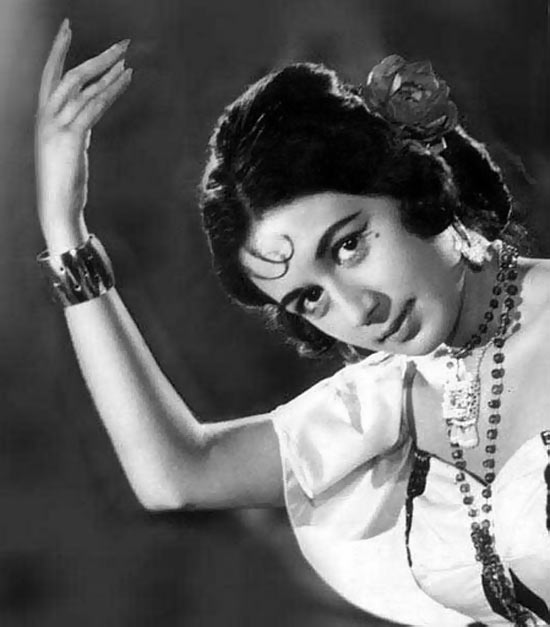
'Nanda was a soft-spoken person, who never lost her temper'


Next
Subhash K Jha

'She was a soft-spoken person, who never lost her temper. She loved being at home.'

'She was a delight to work with. Unlike many heroines, she never threw tantrums on the sets.'
Asha Parekh, one of Nanda's closest friends, and Sanjay Khan, her costar in three films -- Beti, Abhilasha and Woh Din Yaad Karo -- remember the yesteryear actress, who passed away on March 25.

Asha ParekhAsha Parekh

I spoke to her over the phone on Monday night (March 24). She was gone the next day.

She sounded absolutely normal. It is frightening to know that sometimes you don't even get a chance to say goodbye. It reminds one just how fragile life is.
We (along with Helen, Waheeda Rehman and Sadhna) would meet regularly. Sadhana had lately been busy, so she couldn't join us every time. In fact, she couldn't even make it to the funeral.
All four of us had met on Saturday for lunch. That was just three days before she was suddenly snatched away from us.

Now I wonder if the rest of us will ever meet without missing her constantly.
She was a soft-spoken person, who never lost her temper. She loved being at home.

She had become more of a homebody in the later years. She loved her family. The death of one of her brothers a few years ago left her shattered. 
Getting Nanda out of the house was an ordeal.

She had come for my 60th birthday but didn't show up for the 70th.

But I never held that against her. I knew it was too much work for her to dress up for public appearances.

We were very close. We spoke about everything under the sun. My last conversation with her is now etched permanently on my mind.
It's hard to believe that now when I dial her number, she won't be there on the other end of the line. I have lost not just a friend but my confidante.

Tuesday, 18 March 2014

I was bankrupt during Monster Ball Tour in 2009: Lady Gaga

Lady Gaga: I had three million dollars in the bank to my name and I threw it all in to make my stage. (Reuters)
Lady Gaga: I had three million dollars in the bank to my name and I threw it all in to make my stage.

Pop star Lady Gaga has revealed that she was bankrupt during her Monster Ball tour in 2009.
The 27-year-old singer was left broke after spending her entire fortune on the show’s elaborate production, she explained in the upcoming EPIX documentary, reported Ace Showbiz.
“I had three million dollars in the bank to my name and I threw it all in to make my stage. So I was bankrupt during the show,” Gaga said.
The singer explained that she was forced to reassure her family after they were left confused by her financial troubles.
“I remember I went home and I was with my dad and he said, ‘I don’t understand. ‘Bad Romance’ is out. You are all over the radio. Everyone is talking about you and you don’t have a pot to piss in’.
“I said, ‘Just let me do this. Let me just put it on the stage because I think if I can do this I can get Arthur Fogel’s attention.’ And I did.”
The ‘Do What U Want’ singer revealed that her gamble paid off when Live Nation CEO Fogle offered her a lucrative deal. ”I remember he called me and he said, ‘We want to do this’. And he got Live Nation to write me a USD 40 million check. And it changed my life and the life of my whole family,” Gaga said.

Sunday, 9 March 2014

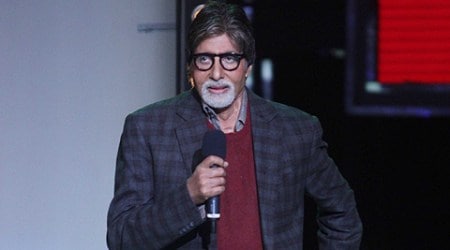
I was merely an actor who got lucky: Amitabh Bachchan

Amitabh Bachchan
Amitabh Bachchan credited his success to the script writers for helping him rule the industry.

Megastar Amitabh Bachchan credited his success to the script writers for helping him rule the industry for more than four decades.
Amitabh Bachchan, 71, who got the ‘Angry Young Man’ image in the industry after his brave portrayal of inspector Vijay in ‘Zanjeer’, said he is thankful to Salim Khan and Javed Akhtar for moulding his image as an actor.
“The credit goes to (‘Zanjeer’) writers Salim- Javed for capturing the prevailing mood of the society. I was just the voice. It was Salim-Javed who thought of it and put in
cinematic emotion. I was merely an actor who got lucky,” Amitabh Bachchan said on the sidelines of India Today conclave 2014 while discussing on the issue ‘Cinema as the mirror of society’.
“The discontent and anger during the Emergency brought about Zanjeer and the ‘ Angry Young Man’,” he added.
While Amitabh Bachchan reflected the image of men in the society of that era but he described filmmaking during that time as “haphazard”.
“It was an individual profession and more of a mom-and- pop organisation, where people would borrow money and make a film. The song and fight sequences would be shot over a week and shown to a financer. Till then, we would sit twiddling our thumbs. Thus, in between, we worked in several films,” he said.
The ‘Sholay’ star also has a successful stint in small screen as a quizmaster. He confessed that he took up ‘Kaun Banega Crorepati’ (KBC) to clear his debts by Amitabh Bachchan Corporation Ltd, an entertainment company.
“We were the first to start corporation of Bollywood in 1995. We did not know how to operate the business and we ran into losses. KBC helped me earn money to pay off the debt.”