Showing posts with label Crimea. Show all posts

Wednesday, 19 March 2014

Crimea takeover a theft on an international scale: Ukraine PM

People rally in support of Crimea joining Russia, with banners and portraits of Russian President Vladimir Putin, reading "We are together," in Red Square in Moscow, Tuesday. (AP)
People rally in support of Crimea joining Russia, with banners and portraits of Russian President Vladimir Putin, reading "We are together," in Red Square in Moscow, Tuesday

Ukraine’s leadership simmered with a mix of hopelessness and anger at losing Crimea, tempering an influx of eager young men signing up as reservists with the growing certainty that no savior would deliver them from the Russian takeover.
For Ukraine’s government in Kiev, it is a crime — one the inexperienced leaders can do little do address in the face of an overwhelmingly superior military force. But for at least one of the group of people in the new leadership, it is a reality that must be dealt with on practical terms.
“This is theft on an international scale, when under the cover of troops, one country has just come and robbed a part of an independent state,” Ukraine’s Prime Minister Arseniy Yatsenyuk said.
Yatsenyuk’s government now has to contend with the immediate complications of an armed confrontation that flared up Tuesday. A Ukrainian military spokesman said a serviceman was killed and another injured when a military facility in Crimea was stormed by armed men. The official said a truck bearing a Russian flag was used in the operation.
Yatsenyuk said the storming showed the dispute “has gone from the political stage to the military through the fault of the Russians.”
But if his rhetoric was combative, there was little to back it up. That is in part down to Ukraine’s relative helplessness and its stated desire to refrain from aggression, but is also a reflection of what authorities see as Moscow’s inflated demands. Rejecting international condemnation, Russian President Vladimir Putin cast his government’s actions as the righting of historic injustices.
“They are demanding to change the constitution, to change the system, to give up Crimea. This is the language of an aggressor … this is the language of Josef Stalin,” said Oleksiy Haran, a politics professor at the University of Kyiv-Mohyla Academy. “Ukraine has done everything which it can. We resisted from violence, which again the West demanded from us. We didn’t kill any Russian soldiers.”
While not recognising the referendum, Ukrainian authorities’ preparations for the practicalities of the situation hint at a mood of resignation.
The justice minister offered emergency accommodation in vacation centers for any Ukrainian citizens who want to leave Crimea, where the ethnic Russian population is a majority.
“My advice to compatriots who live in Crimea is not to give up your Ukrainian passports. You are citizens of Ukraine and you are in effect hostages of the occupiers,” Justice Minister Pavel Petrenko told Channel 5 television. “People should make their own decision about revoking citizenship and nobody has the right to force them.”
Ukraine’s one major lever of power — the electricity and water that comes from the mainland — is complicated by the new Kiev government’s reluctance to alienate the residents, a majority of them ethnic Russians, but with large Ukrainian and Tatar communities.
With the outcome of the Crimean predicament still nominally in the balance, the government is confronting a growing clamor in eastern Ukraine, another heavily Russian-speaking part of the country, for secession or greater federalization. The claims of the ethnic Russian population ignited soon after the parliament that took center stage after last month’s ouster of President Viktor Yanukovych provoked outrage — from the Kremlin most notably — by moving to downgrade the role of the Russian language.
That plan has since been dropped and Yatsenyuk on Tuesday insisted that Russian would retain its official status in areas where it is spoken by the majority.
“Nobody is encroaching on your right to freely use the Russian language. My wife Tereziya speaks primarily in Russian. And she, like millions of other Russian speakers, does not require protection from the Kremlin,” he said.
To deal with Moscow, Ukraine will need to restore channels of dialogue, which Russia is reluctant to do with a post-revolutionary government that it describes in the most disparaging terms.
Sergei Taruta, a billionaire businessman appointed by interim authorities to govern the heavily industrial Donetsk region, told The Associated Press that he has proposed the creation of a “national unity forum” as a possible solution to that problem.
“We should choose delegates that could lead diplomatic dialogue with Russia. Because as I understand it, there is no negotiator now that has a legitimate mandate,” he said. “It is only through a negotiation that we can solve the fraught problems that affect both Crimea and eastern Ukraine. And I think that this negotiating group should also work with a group of Western guarantors that could vouch for the territorial integrity of our country.”
The government announced this week that it will over the coming 45 days mobilize tens of thousands of reservists. Recruitment officers stationed along a main street in the capital, Kiev, were signing up volunteers on Tuesday.
At least one of the self-defense groups that came to prominence during the protests, Spilna Sprava, has intimated that it intends to ready for a fight as a partisan force.
“In the conditions of war with Russia, the regular army has shown itself to be insufficiently effective, which is something Ukraine’s army command has admitted,” Interfax news agency cited Spilna Sprava coordinator Alexander Danilyuk as saying.
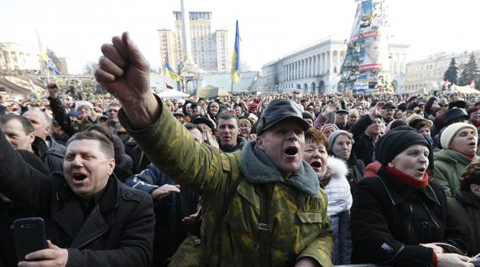
On and around the Kiev square from which the protest movement sprung up, crude barricades remain in place and within them, groups of men young and old in store-bought fatigues mill around, sharing jokes and warming themselves by barrel fires.
The plan is for people on the Maidan, as the square is known, to stay until a new and elected government is formed and to ensure that it lives up to its promises.
Vasily Volchenko, a 51-year old retired career military officer manning a stall of knick-knacks memorializing the bloody protests that culminated in Yanukovych’s overthrow, said the loss of Crimea is not going down well.
“We had hoped the government, even though it is only provisional, would react quickly, but they have done practically nothing,” he said. “If they think they can give up Crimea that easily, then they are quite mistaken. We will just self-organize, because we are not giving up our Ukraine to anybody.”

Putin annexes Crimea, says it is Russia’s in people’s hearts, minds

Putin with three top leaders of Crimea after signing the annexation treaty at the Kremlin on Tuesday. REUTERS
Putin with three top leaders of Crimea after signing the annexation treaty at the Kremlin on Tuesday.

President Vladimir V Putin claimed Crimea as a part of Russia on Tuesday, reversing what he described as a historic mistake made by the Soviet Union 60 years ago and brushing aside international condemnation that could leave Russia isolated for years to come.
Within minutes of delivering a passionate speech to Russia’s political elite, Putin cemented his pledge by signing a draft treaty with Crimean leaders to make the strategic Black Sea peninsula part of Russia. The events unfolded two days after Crimeans voted in a disputed referendum to break away from Ukraine. While the treaty signed Tuesday still needs parliamentary approval, that is regarded as a formality.
“Crimea has always been an integral part of Russia in the hearts and minds of people,” Putin declared in his address, delivered in the chandeliered St George’s Hall in the Grand Kremlin Palace before hundreds of members of Parliament, governors and others.
His remarks, which lasted 47 minutes, were interrupted repeatedly by thunderous applause, standing ovations and at the end chants of “Russia, Russia”. Some in the audience wiped tears from their eyes.
Reaching deep into Russian and Soviet history, Putin said he did not seek to divide Ukraine any further, but vowed that he would protect Russia’s national security from what he described as Western, and particularly American, actions that had left Russia feeling cornered.
He spoke as he has often in the past of the humiliations Russia has suffered in a world with one dominant superpower — from the NATO air war in Kosovo in 1999 against Moscow’s Serbian allies to the one in Libya that toppled Col. Muammar Gaddafi in 2011 on what he called the false pretence of a humanitarian intervention.
He dipped into deep wells of emotion, starting with the 10th century baptism of Prince Vladimir, whose conversion to Orthodox Christianity transformed the kingdom then known as Rus, to the collapse of the Soviet Union, which left many Russians of his generation feeling that they had been stripped of their nation overnight.
“Millions of Russians went to bed in one country and woke up abroad,” he said. “Overnight, they were minorities in the former Soviet republics, and the Russian people became one of the biggest — if not the biggest — divided nation in the world.
“They cheated us again and again, made decisions behind our back, presenting us with completed facts,” he said of the West. “That’s the way it was with the expansion of NATO in the east, with the deployment of military infrastructure at our borders. They always told us the same thing: ‘Well, this doesn’t involve you.’ “
Western reaction was swift. The White House condemned the move, which it said it would not recognize. Britain’s foreign secretary, William Hague, told Parliament on Tuesday that the crisis in Ukraine “is the most serious test of European security in the 21st century so far.”
“No amount of sham and perverse democratic process or skewed historical references can make up for the fact that this is an incursion into a sovereign state and a land grab of part of its territory with no respect for the law of that country or for international law,” he said.
German Chancellor Angela Merkel firmly rejected Moscow’s absorption of Crimea, a position she said was widely supported by international organizations including the United Nations and the European Council.
“The so-called referendum breached international law, the declaration of independence which the Russian president accepted yesterday was against international law, and the absorption into the Russian Federation is, in our firm opinion, also against international law,” Merkel told reporters in Berlin.
(In Paris, French foreign minister Laurent Fabius said Russia had been suspended from the G8 because of the Crimean annexation, wire agencies reported. Russia has the G8’s rotating leadership currently, and Putin was scheduled to host President Barack Obama and other leaders of the group in Sochi in June.
“Concerning the G8… we decided to suspend Russia’s participation, and it is envisaged that all the other countries, the seven leading countries, will unite without Russia,” Fabius said on Europe-1 radio.)
Putin brushed aside concerns about economic sanctions and diplomatic isolation, saying the West had forced Russia’s hand. By supporting the political uprising that toppled Ukraine’s president, Viktor F Yanukovych, the US and Europe crossed “a red line,” he said, forcing him to act to protect Crimea’s population from what he called “Russophobes and neo-Nazis” that had seized control in an illegal coup abetted by foreigners.
“If you press a spring too hard,” he said, “it will recoil.”

Tuesday, 18 March 2014

After US, Japan imposes sanctions on Russia over Crimea

(Reuters)
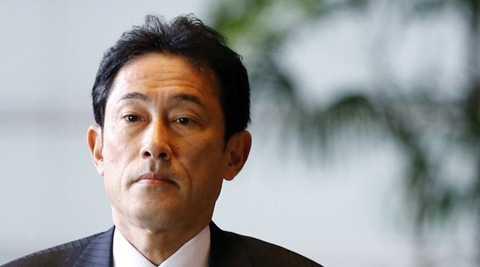
Japanese Foreign Minister Fumio Kishida says that Japan does not recognise the outcome of Crimea's referendum

Japan on Tuesday imposed some modest sanctions on Russia for its recognition of Crimea as an independent state suspending talks on relaxing visa requirements between the two countries and talks on investment, space exploration and military cooperation.
Foreign Minister Fumio Kishida said in a statement that Japan does not recognise the outcome of Crimea’s referendum to split from Ukraine, saying it violates the Ukrainian constitution. “It is regretful that Russia’s recognition of the independence of Crimea interferes with the integrity of Ukraine’s sovereignty and territory,” Kishida told reporters.
“We cannot overlook Russia’s attempt to change the status quo by force.” The moves are seen as mild compared to sanctions by the US and European Union, which have frozen the assets of individuals linked to the unrest in Crimea or who support the region’s vote to secede from Ukraine.
But Japanese officials said that an investment seminar sponsored by private institute but also backed by both governments that is scheduled for tomorrow was still on. Ties between Russia and Japan have been strained for decades due to a dispute over a cluster of Russian-controlled islands off the northern island of Hokkaido called the southern Kurils in Russia and the Northern Territories in Japan.
The dispute has kept the two countries from signing a peace treaty after World War II. But last month, Prime Minister Shinzo Abe said that negotiations toward forging a treaty were accelerating. Abe is also eager to unleash new trade and energy business with Russia that has been hung up by the dispute.
Kishida urged Russia to comply with international laws, withdraw the recognition of Crimea’s independence and not move further toward its annexation.

Vladimir Putin annexes Crimea, says it has always been Russia’s

putin
Putin signed an order “to approve the draft treaty between the Russian Federation and the Republic of Crimea on adopting the Republic of Crimea into the Russian Federation”.

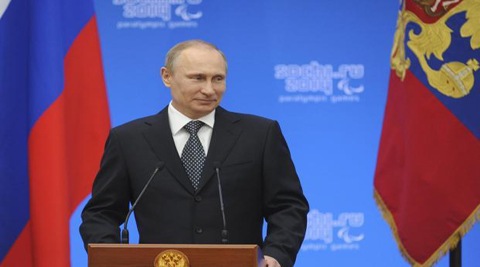
With a historic sweep of his pen, President Vladimir Putin signed a treaty on Tuesday to annex Crimea, describing the move as correcting past injustice and a necessary response to what he called Western encroachment upon Russia’s vital interests.
In a 40-minute speech televised live from the Kremlin, Putin said “in people’s hearts and minds, Crimea has always been an integral part of Russia”.
He dismissed Western criticism of Sunday’s Crimean referendum — in which residents of the strategic Black Sea peninsula overwhelmingly backed breaking off from Ukraine and joining Russia — as a manifestation of the West’s double standards.
At the same time, Putin said  Russia did not want to move into other regions of Ukraine: “We don’t want division of Ukraine.” Thousands of Russian troops have been massed along Ukraine’s eastern border for the last few weeks — Russia says that was for military training while the US and Europe view the troops as an intimidation tactic.
In Paris, French foreign minister Laurent Fabius said Russia had been suspended from the G8 because of the Crimean annexation. Russia has the G8’s rotating leadership currently, and Putin was scheduled to host President Barack Obama and other leaders of the group in Sochi in June.
“Concerning the G8… we decided to suspend Russia’s participation, and it is envisaged that all the other countries, the seven leading countries, will unite without Russia,” Fabius said on Europe-1 radio.
Britain’s foreign Office said Russia was still part of the G8, even though a suspension was not ruled out. British foreign secretary William Hague said Putin had chosen “the route of isolation, denying the citizens of his own country, and of Crimea, partnership with the international community and full membership of a range of international organisations”, and that it was now highly likely that other G8 countries would want to meet without Russia.
Tokyo and Berlin said they were not aware of a decision to suspend Moscow.
In Kiev, the Ukrainian government said it did not recognise the treaty signed in Moscow. “The signing of the so-called agreement on Crimea joining the Russian Federation and the corresponding address by the Russian president has nothing in common with law or democracy or common sense,” foreign ministry spokesman Evhen Perebynis said on Twitter.
“Putin’s address very clearly demonstrates just how real the threat is that Russia poses to international security and international security,” he said.
Speaking at the Kremlin’s white-and-gold St George Hall on the other hand, Putin cast the post-Yanukovych Ukrainian government as illegitimate, driven by radical “nationalists, neo-Nazis, Russophobes and anti-Semites”.
He said the rights of ethnic Russians in Ukraine had been abused by the new Ukrainian government. He insisted that Crimea’s vote to join Russia was in line with international law and reflected its right for self-determination.

Putin annexes Crimea, says it is Russia’s in people’s hearts, minds

Putin with three top leaders of Crimea after signing the annexation treaty at the Kremlin on Tuesday. REUTERS
Putin with three top leaders of Crimea after signing the annexation treaty at the Kremlin on Tuesday.

President Vladimir V Putin claimed Crimea as a part of Russia on Tuesday, reversing what he described as a historic mistake made by the Soviet Union 60 years ago and brushing aside international condemnation that could leave Russia isolated for years to come.
Within minutes of delivering a passionate speech to Russia’s political elite, Putin cemented his pledge by signing a draft treaty with Crimean leaders to make the strategic Black Sea peninsula part of Russia. The events unfolded two days after Crimeans voted in a disputed referendum to break away from Ukraine. While the treaty signed Tuesday still needs parliamentary approval, that is regarded as a formality.
“Crimea has always been an integral part of Russia in the hearts and minds of people,” Putin declared in his address, delivered in the chandeliered St George’s Hall in the Grand Kremlin Palace before hundreds of members of Parliament, governors and others.
His remarks, which lasted 47 minutes, were interrupted repeatedly by thunderous applause, standing ovations and at the end chants of “Russia, Russia”. Some in the audience wiped tears from their eyes.
Reaching deep into Russian and Soviet history, Putin said he did not seek to divide Ukraine any further, but vowed that he would protect Russia’s national security from what he described as Western, and particularly American, actions that had left Russia feeling cornered.
He spoke as he has often in the past of the humiliations Russia has suffered in a world with one dominant superpower — from the NATO air war in Kosovo in 1999 against Moscow’s Serbian allies to the one in Libya that toppled Col. Muammar Gaddafi in 2011 on what he called the false pretence of a humanitarian intervention.
He dipped into deep wells of emotion, starting with the 10th century baptism of Prince Vladimir, whose conversion to Orthodox Christianity transformed the kingdom then known as Rus, to the collapse of the Soviet Union, which left many Russians of his generation feeling that they had been stripped of their nation overnight.
“Millions of Russians went to bed in one country and woke up abroad,” he said. “Overnight, they were minorities in the former Soviet republics, and the Russian people became one of the biggest — if not the biggest — divided nation in the world.
“They cheated us again and again, made decisions behind our back, presenting us with completed facts,” he said of the West. “That’s the way it was with the expansion of NATO in the east, with the deployment of military infrastructure at our borders. They always told us the same thing: ‘Well, this doesn’t involve you.’ “
Western reaction was swift. The White House condemned the move, which it said it would not recognize. Britain’s foreign secretary, William Hague, told Parliament on Tuesday that the crisis in Ukraine “is the most serious test of European security in the 21st century so far.”
“No amount of sham and perverse democratic process or skewed historical references can make up for the fact that this is an incursion into a sovereign state and a land grab of part of its territory with no respect for the law of that country or for international law,” he said.
German Chancellor Angela Merkel firmly rejected Moscow’s absorption of Crimea, a position she said was widely supported by international organizations including the United Nations and the European Council.
“The so-called referendum breached international law, the declaration of independence which the Russian president accepted yesterday was against international law, and the absorption into the Russian Federation is, in our firm opinion, also against international law,” Merkel told reporters in Berlin.
(In Paris, French foreign minister Laurent Fabius said Russia had been suspended from the G8 because of the Crimean annexation, wire agencies reported. Russia has the G8’s rotating leadership currently, and Putin was scheduled to host President Barack Obama and other leaders of the group in Sochi in June.
“Concerning the G8… we decided to suspend Russia’s participation, and it is envisaged that all the other countries, the seven leading countries, will unite without Russia,” Fabius said on Europe-1 radio.)
Putin brushed aside concerns about economic sanctions and diplomatic isolation, saying the West had forced Russia’s hand. By supporting the political uprising that toppled Ukraine’s president, Viktor F Yanukovych, the US and Europe crossed “a red line,” he said, forcing him to act to protect Crimea’s population from what he called “Russophobes and neo-Nazis” that had seized control in an illegal coup abetted by foreigners.
“If you press a spring too hard,” he said, “it will recoil.”

Wednesday, 12 March 2014

Ukraine’s Crimea seeks to become an independent state

crowd  chanting "Rossiya! Rossiya!" and waving the Russian tricolour. (Reuters)
crowd chanting "Rossiya! Rossiya!" and waving the Russian tricolour.

The Crimean parliament voted on Tuesday that the Black Sea peninsula will declare itself an independent state if its residents agree to split off from Ukraine and join Russia in a referendum. Crimea’s regional legislature today adopted a “declaration of independence of the Autonomous Republic of Crimea.” The document specified that Crimea will become an independent state if its residents vote on Sunday in favour of joining Russia in the referendum.
Western nations have said they will not recognise the vote as legitimate. But the move might be used as an attempt to ease tensions with Crimea existing as a self-proclaimed state without Russia moving quickly to incorporate it into its territory.
After a brief war between Russia and Georgia in 2008, some leaders sin Georgia’s breakaway provinces of Abkhazia and South Ossetia also asked to join Russia, but their request was never granted. Meanwhile, Ukraine’s acting president today called for the formation of a national guard and for the mobilisation of reserves and volunteers into the country’s armed forces.
Oleksandr Turchynov asked the national parliament to approve turning the country’s Interior Ministry troops into a National Guard “to defend the country and citizens against any criminals, against external and internal aggression.” Turchynov said that the mobilisation will include those who have previously served in the army and volunteers. Russian forces have strengthened their control over Ukraine’s Crimea region in the run-up to a referendum set for Sunday on whether to split off and become part of Russia.
Ukrainian Prime Minister Arseniy Yatsenyuk, who will fly to Washington to meet with Barack Obama tomorrow, called on Western nations to defend Ukraine against a nation “that is armed to the teeth and that has nuclear weapons.”

Monday, 10 March 2014

Crimea ’soldiers’ swear oath before PM

imageSIMFEROPOL: Crimea's pro-Russian authorities sought to boost their claim to break from Ukraine on Monday as volunteer soldiers swore an oath of allegiance in front of prime minister Sergei Aksyonov.
Clutching Kalashnikov rifles to their chests and wearing fur-lined military fatigues, the 36 volunteers took their turns pledging to "defend the people of Crimea".
Before a large crowd of assembled journalists, Aksyonov, wearing a bullet-proof vest under his jacket and protected by two bodyguards, thanked the volunteers for their "devotion in this difficult time".
"You are now part of the bulwark defending the people of Crimea," he said. He told journalists 186 volunteers had so far joined the new Crimean "self-defence" units after pro-Moscow forces took power in the region and announced their intention to join with Russia, with a referendum planned for Sunday.
"We have no intention of going to war with anyone," Aksyonov said. "We simply want to freely decide our own destiny. That is why we created armed forces. After the referendum they can be integrated into the Russian army."
Aksyonov said the Ukrainian soldiers who remain in Crimea, most of them inside bases surrounded by Russian troops, can join with pro-Russian forces or leave.
"After the referendum they will have to leave or those who are citizens and who want to could swear allegiance to the autonomous republic of Crimea or the Russian Federation."

Sunday, 9 March 2014

Rival Ukraine rallies raise tensions as Crimea crisis deepens

imageKIEV: Thousands took to the streets for rival pro- and anti-Kremlin rallies across Ukraine on Sunday as the West and Moscow dug in their heels over a deepening crisis in Crimea.
The protests come after a new marathon round of phone calls by US President Barack Obama seeking to defuse the Cold War-style standoff in the ex-Soviet state.
Tensions in Ukraine's Black Sea peninsula of Crimea, which has come under de facto control by Russian forces, have resulted in a new face-off between Russia and the West, with each side imposing sanctions or warning of further prohibitive measures to force the other to back down.
Foreign observers have failed to get into Crimea, a majority Russophone region of Ukraine, to get a first-hand look at the situation on the ground and were forced to turn back on Saturday after pro-Kremlin gunmen fired warning shots.
Ukrainian border guards said Saturday that about 60 Russian military lorries had entered the rugged peninsula of two million in the last 24 hours by land and sea, a sign that Moscow was far from pulling back.
They also said "Russian extremists" had attacked a Crimea radar post, in the latest move by pro-Russian forces who have surrounded Ukrainian military bases and taken at least one missile defence unit.
"Armed attackers in military uniform and civil clothes broke the door and entered the building. Radio technic units and telecommunication cables were dissembled and destroyed," the border guards said in a statement in English on their website.
Sunday marks the 200th anniversary of the birth of Ukrainian poet Taras Shevchenko and patriotic rallies were planned in Kiev and -- in a show of defiance towards Russia -- in Crimea's key cities of Simferopol and Sevastopol.
The rallies are also significant ahead of controversial plans by Crimea's regional pro-Moscow government to hold a referendum on joining Russia on March 16, which could lead to a formal annexation of the territory.
In the eastern city of Donetsk, a former stronghold of Ukraine's ousted president Viktor Yanukovych and the site of regular protests in recent days, there were fears of clashes as pro-Kiev demonstrators planned to celebrate Shevchenko, while pro-Russian protesters were due to hold a counter-rally.
The 19th-century poet has been credited with creating the modern Ukrainian language and the idea of Ukraine as a nation, giving the new Wester-backed government in Kiev a powerful opportunity on Sunday to revive some nationalist fervour in the face of Russia's incursion.

Saturday, 8 March 2014

Russia reinforces military presence in Crimea

Ukrainian riot police stand at the entrance of the regional administrative building during a pro Russian rally in Donetsk, Ukraine. (AP)

Dozens of military trucks transporting heavily armed soldiers rumbled over Crimea’s rutted roads Saturday as Russia reinforced its armed presence on the disputed peninsula in the Black Sea. Moscow’s foreign minister ruled out any dialogue with Ukraine’s new authorities, whom he dismissed as the puppets of extremists.
The Russians have denied their armed forces are active in Crimea, but an Associated Press reporter trailed one military convoy Saturday afternoon from 25 miles (40 kilometers) west of Feodosia to a military airfield at Gvardeiskoe north of Simferopol, over which a Russian flag flew.
Some of the army green vehicles had Russian license plates and numbers indicating that they were from the Moscow region. Some towed mobile kitchens and what appeared to be mobile medical equipment.
Vladislav Seleznyov, a Crimean-based spokesman for the Ukrainian armed forces, told AP that witnesses had reported seeing amphibious military ships unloading around 200 military vehicles in eastern Crimea on Friday night after apparently having crossed the Straits of Kerch, which separates Crimea from Russian territory.
“Neither the equipment, nor the paratroopers have insignia that identify them as Russian, but we have no doubt as to their allegiance,” Seleznyov said.
The amphibious operation appeared to be one of the largest movements of Russian military forces since they appeared in Crimea a week ago.
Seleznyov also said a convoy of more than 60 military trucks was spotted Saturday heading from Feodosia toward Simferopol, the regional capital. An AP reporter caught up with the convoy and trailed it to Russian-controlled airfield. In the rear of the vehicles, heavily armed soldiers could be seen, though none appeared to have identifying badges or insignia. Soldiers spat at the reporters following them.
The regional parliament in Crimea has set a March 16 referendum on leaving Ukraine to join Russia, and senior lawmakers in Moscow said they would support the move, ignoring sanctions threats and warnings from President Barack Obama that the vote would violate international law.
The strategic peninsula in southern Ukraine has become the flashpoint in the battle for Ukraine, where three months of protests sent President Viktor Yanukovych fleeing to Russia. A majority of people in Crimea identify with Russia, and Moscow’s Black Sea Fleet is based in Sevastopol, as is Ukraine’s.
While the U.S. and the EU urged Russia to engage in dialogue with new Ukrainian authorities, the Kremlin has refused to do so, denouncing the change of power in Ukraine as an “unconstitutional coup.”
Russian Foreign Minister Sergey Lavrov said Moscow sees no sense in having a dialogue with Ukraine’s new authorities because, in his view, they kowtow to radical nationalists.
“The so-called interim government isn’t independent, it depends, to our great regret, on radical nationalists who have seized power with arms,” he said at a news conference. He said that nationalist groups use “intimidation and terror” to control Ukraine.
Despite that tough talk, the Russian Foreign Ministry said Grigory Karasin met Saturday with Ukrainian Ambassador Volodymyr Yelchenko, the first such diplomatic contact since the crisis began. In a terse statement, the ministry said only that they discussed issues related to Russian-Ukrainian ties in a “sincere atmosphere.”
At a news conference in Kiev, Ukraine’s new foreign minister, Andrii Deshchytsi spoke hopefully about creation of a contact group made up of foreign ministers of various countries to mediate the crisis. Forming the group was an idea discussed during meetings between Ukraine’s prime minister and European Union leaders in Brussels on Thursday.
Deshchytsi said that he learned from mediators that Russia hasn’t “categorically’ refused the idea of permitting a contact group to help broker an end to the dispute.
“The Russians are thinking,” Deshchytsi said, so there is “reason to hope.” He reiterated that the new Ukrainian government understands it is vital to need to establish good relations with all neighbors, including Russia.
Russia’s President Vladimir Putin has said that Moscow has no intention of annexing Crimea, but that its people have the right to determine the region’s status in a referendum.
The Crimean referendum has been denounced by Ukraine’s new government, and Obama has said it would violate international law. The U.S. moved Thursday to impose its first sanctions on Russians involved in the military occupation of Crimea.
Speaking on BBC on Saturday, NATO Secretary-General Anders Fogh Rasmussen said that while there is no military response to the recent events of Crimea, the crisis was a reminder of threats to European security and stability.
“I do believe that politicians all over NATO will now rethink the whole thing about investment in security and defense,” he told the BBC. “Obviously, defense comes at a cost but insecurity is much more expensive.”
An international military mission composed of officers from the U.S. and 28 other nations tried again Saturday to enter Crimea, but it was turned back around the town of Armiansk by armed men.
An AP reporter traveling with the 54 observers from the Organization for Security and Cooperation in Europe said that after the group had stopped, the armed men fired bursts of automatic weapons fire to halt other unidentified vehicles. No injuries were reported.
In Simferopol, meanwhile, a public ceremony was held for the swearing-in of the first unit in the pro-Russia “Military Forces of the Autonomous Republic of Crimea.” About 30 men armed with AK-47s, and another 20 or so unarmed, turned out. They ranged in age from teenagers to a man who looked to be about 60. They were sworn in at a park in front of an eternal flame to those killed in World War II.
Sergei Aksyonov, the Crimean prime minister, came to the ceremony and was greeted by the soldiers with shouts of “Commander!”
He said their main role, at least until the referendum, would be to “keep the peace.” He said he didn’t foresee any fighting with the Ukrainian soldiers still at bases in Crimea.
“We are not enemies with those soldiers who pledged loyalty to the Ukrainian state. They are not our enemies,” Aksyonov said. He said they would be given the chance to go safely back to Ukraine if they want.
In the week since Russia seized control of Crimea, Russian troops have been neutralizing and disarming Ukrainian military bases here. Some Ukrainian units, however, have refused to give up. Aksyonov has said pro-Russian forces numbering more than 11,000 now control all access to the region and have blockaded all military bases that haven’t yet surrendered.
On Friday evening, pro-Russia soldiers tried to take over another Ukrainian base in Sevastopol, resulting in a tense standoff ensued that lasted for several hours.
Lt. Col. Vitaly Onishchenko, deputy commander of the base, said three dozen men wearing unmarked camouflage uniforms arrived late Friday. While one group climbed over a wall on one side of the base, another crashed a heavy military truck through the gates, Onishchenko said.
He said Saturday that they turned off power, cut telephone lines and demanded that about 100 Ukrainian troops, who barricaded themselves into one of the base buildings, surrender their weapons and swear allegiance to Russia. The invaders left around midnight.
No shots were fired in and no injuries were reported.
Russia has described the troops who wear green uniforms without insignia as local “self-defense forces.” But Onishchenko said the troops who tried to overrun his base were clearly Russian.
“These were Russian servicemen specially ordered,” he said. “Their watches were set to Moscow time. They spoke with Russian accents and they didn’t hide their allegiance to the Russian Federation.”

OSCE says monitors trying again to enter Crimea

imageVIENNA: The Organization for Security and Co-operation in Europe said its monitors would try again Saturday to enter Crimea, two days after being prevented from doing so.
"Yes, the mission will try to enter Crimea today again, they are now traveling by road to Armyansk checkpoint," OSCE spokeswoman Tatyana Baeva said, adding that the mission now numbered 54 military and civilian staff from 29 countries.

Friday, 7 March 2014

Crimea Voted to become a part of the Russian Federation

Authorities in Crimea voted to accelerate secession from Ukraine and unanimously backed a law that declared the territory to be part of the Russian Federation on 6 March 2014.
The cabinet had decided to take the decision by referendum in 10 days. MPs of Crimea had voted by 78 votes to nil for the territory to leave Ukraine.
A referendum on more autonomy for the region due on 30 March 2014 was brought forward to 16 March 2014. Now the residents had the option to unify the Black Sea peninsula with Russia.

After the law was initiated, the Crimean government asserted that all Ukrainian troops on the territory of Crimea should either leave or be treated as occupiers. Crimea is planning to introduce the rouble and readopt Russian state symbols.
Russia has welcomed the decision of the Crimean Government and Russian Parliament DUMA had begun work on a bill that would make it easier for Russia to join new territories.
While on the other hand, the Ukrainian government had started the procedures to dismiss Crimea's assembly and to block the referendum. They are claiming the move as completely illegal and anti-constitutional.
The move was highly criticized by member of European Commission and USA. They opined that the proposed referendum on the future of Crimea would violate the constitution and international law.
About Crimea
The Autonomous Republic of Crimea is an autonomous parliamentary republic within Ukraine and is governed by the Constitution of Crimea in accordance with the laws of Ukraine.
The capital is the city of Simferopol, located in the center of the peninsula. Crimea's area is 26,200 square kilometers.

Thursday, 6 March 2014

Crimea standoff threatens tourist season in Yalta

imageYALTA: Russian soldiers may not be in Yalta, but locals are worried about their tourist season as the city on Crimea's Black Sea coast wakes up to the first spring sun amid fears of a possible war between Ukraine and Russia.
In the seaside city nestled in the foothills of the Ukrainian Riviera, police loyal to the authorities in Kiev patrol the seafront with their hands in their pockets.
"All is well, all is calm," said one of them.
There are no ships in the port, only five yachts are bobbing on the waves, sails folded, and a dozen pleasure boats are lined up at the jetty.
"There are no Russians here, no soldiers, no problems. This is a civilian port, security is provided by private guards," said Anatoly Sviritov, a security officer.
It's normal for there to be no tourists yet in the first days of March, said Lilia Ivanova, a travel agency director.
But the tense political and military situation, loud headlines and photos of armed and helmeted men in major newspapers around the world, do not bode well for the tourism season.
Russian forces took de facto control of Crimea, home to the Kremlin's Black Sea Fleet, following the ouster on February 22 of Ukraine's pro-Moscow president Viktor Yanukovych.
The local parliament in Crimea took a step Thursday towards seceding from ex-Soviet Ukraine, asking to become part of Russia and pledging a referendum on the subject for March 16.
"We are against Putin's aggression, we fear that it will scare tourists away," said Ivanova.
"There is no tourism where there is terrorism," added the young woman.
An English-language poster on the wall in her Intourist travel agency reads: "Yalta, Crimea's cruise capital."
The city hosts some 10,000 cruise passengers a year and a first cruise ship, from Germany, is expected on April 11, she said.
"We do not know if they will come."
On the promenade, the tricycle rentals, fairground rides, bouncy castles with slides and shooting ranges are deserted.
In the cold wind, several families rush towards the few open cafes.
- 'What happened in Kiev is illegal' -
On the esplanade, pro-Moscow activists have set up a tent under the statue of Lenin.
One of their placards reads "No to NATO", another "Russia protects us from Nazis".
Patriotic songs and Russian flags attract gawkers. Some of them agree to sign a petition.
Businessman Vitaly Akhmetov, a 33-year-old strapping blond in a black leather jacket, said he collected "over 27,000 signatures to demand a referendum on Crimea's future".
"We feel reassured by the fact that Moscow has sent in troops to protect us," he said.
"We want them to stay. What happened in Kiev is illegal. Ukraine no longer exists as a country after their revolution. 98 percent of people do not want to deal with these bandits."
This was where the world was divided into Western and Soviet spheres of influence and the post-war geopolitical map was drawn up when Joseph Stalin hosted Franklin Roosevelt and Winston Churchill in February 1945.
In the palace's terraced garden overlooking the seashore, Vladislav, Yuri, and Inna bask in the sun, playing with a cat, and waiting for the start of an excursion. The teenagers came from central Ukraine to spend some three weeks in a nearby sanatorium.
"When the crisis began, our parents called us asking to leave but we reassured them. It is calm here," said Vladislav with a smile.
"All this is politics. There will be no war," added Yuri.
"The borders exist, why change them? Nobody is threatening the rights or lives of Russians in Ukraine. This is propaganda and it will not work."

Wednesday, 5 March 2014

UN envoy cuts short Crimea mission

imageSIMFEROPOL: UN special envoy to Crimea Robert Serry cut short his mission to the region Wednesday after unidentified gunmen threatened him and ordered him to leave, an assistant travelling with him told AFP.
Serry, who had been sent to assess the situation in the disputed Black Sea peninsula for UN chief Ban Ki-moon, was confronted by gunmen outside the Ukrainian naval headquarters in Crimea's capital Simferopol.
After he was prevented from returning to his vehicle, he dropped into a cafe to use a telephone to alert the mission of the incident, and an angry group of pro-Russian activists briefly blocked his exit, the aide said.
Serry then left on foot for his hotel after his safety was assured, and he was driven to the airport where he was in a lounge waiting for a flight. "He's fine. The self-defence militias in Simferopol have guaranteed his security," Serry's assistant told AFP by phone from the car.
"He wants to fly to Kiev but there is no ticket for him yet. He is hoping that he can leave Crimea without further incident," she said. Serry himself would not speak on the phone. UN deputy secretary general Jan Eliasson said: "He is in good shape physically but he feels threatened."
Serry, a former Dutch ambassador to Kiev who was travelling with a UN colleague, was accosted by gunmen outside the naval headquarters on Wednesday and warned "he should leave Crimea," according to the United Nations.
Serry had arrived only Tuesday in the tense Crimean peninsula, which has come under de facto control by Russian forces. He had already aborted a trip to Crimea last week, saying tensions made it impossible to visit the peninsula.

Tuesday, 4 March 2014

News World news Ukraine Russian takeover of Crimea will not descend into war, says Vladimir Putin


Vladimir Putin
Russia's president, Vladimir Putin, says he told the fugitive president Viktor Yanukovych that he has no political future after fleeing Ukraine. Photograph: Sky News
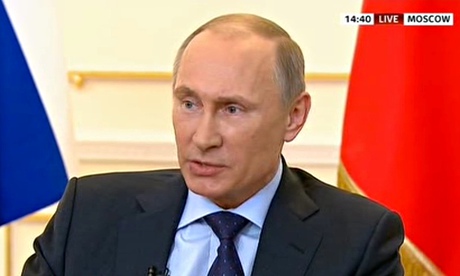
Vladimir Putin is confident Russia's takeover of the Crimean peninsula – where 16,000 pro-Russian troops are in control of the region's security and administrative infrastructure – will not descend into war.
During a live address on Russian television, the president insisted that the armed forces of Russia and Ukraine were "brothers in arms".
"We will not go to war with the Ukrainian people. If we do take military action, it will only be for the protection of the Ukrainian people,"said Putin, adding that there was no scenario in which Russian troops would fire "on women and children".
The Russian president continued: "Ukraine is not only our closest neighbour it is our fraternal neighbour. Our armed forces are brothers in arms, friends. They know each other personally. I'm sure Ukrainian and Russian military will not be on different sides of the barricades but on the same side. Unity is happening now in the Ukraine, where not a single shot has been fired, except in occasional scuffles."
Putin denied that the Russian-speaking soldiers occupying key Crimean military sites were Russian special forces, describing them as pro-Russian local self-defence forces.
"There are many military uniforms. Go into any local shop and you can find one," he said.
Putin was speaking shortly after gunfire rang out at the Belbek airbase in the Crimean peninsula, where a standoff between pro-Russian and Ukrainian soldiers threatened to erupt in clashes.
Warning shots were fired in the air by more than a dozen pro-Russian troops, who had taken over the military site, after about 300 Ukrainian troops marched towards them.
Putin also insisted that ousted Ukrainian leader, Viktor Yanukovych, was the legitimate leader of Ukraine and that the "so-called" acting president had no authority and the new government in Kiev illegal.
Putin gave his address as US secretary of state was due to arrive in Kiev to hold crisis talks with the new Ukrainian government, hours after Washington suspended all military engagements with Russia, including exercises and port visits, in response to Moscow sending troops into Crimea.
Responding to journalists' questions on the US position and Kerry's involvement, Putin said: "The secretary of state is important but he does not determine the policy of the United States. I am hearing many different things."
Barack Obama had warned that the US government would look at economic and diplomatic sanctions that would isolate Moscow over Russia's involvement in the Ukraine crisis. The US also put on hold trade and investment talks with Russia.
Referring to these threats from the White House, and other western leaders to eject Russia from the G8 ahead of looming talks, the president said calmly that he was still preparing for the talks: "If the leaders don't want to come, fair enough."
During his impromptu and occasionally rambling address, Putin said he had advised Yanukovych not to dismiss the feared Ukrainian riot police from Kiev, warning the ousted leader that "chaos, anarchy" would ensue if he did. Putin marked the beginning of the "chaos that reigns today" with Yanukovych's dismissal of these forces.
"Yanukovych has no political future now, I have told him that," Putin said.
Earlier on Tuesday, the Kremlin ordered Russian troops carrying out exercises near Ukraine's eastern border to return to their barracks.
Russia's invasion of Ukraine's Crimean region has so far been bloodless despite tense standoffs and threats from both sides. A supposed Russian ultimatum for two Ukrainian warships to surrender passed without action from either side on Tuesday morning.
The warships remained anchored in the Crimean port of Sevastopol early on Tuesday, a day after Ukrainian authorities claimed that Russian forces had issued an ultimatum for the ships to surrender or be seized. Russian defence ministry spokesman Vladimir Anikin said on Monday that no ultimatum had been issued.
Russia's ambassador to the UN claimed on Monday that Yanukovych had requested that Russian soldiers be sent to Crimea "to establish legitimacy, peace, law and order".
Vitaly Churkin told a UN security council meeting that Yanukovych wrote to Vladimir Putin on Saturday.
France's ambassador to the UN, Gérard Araud, said the letter was just a piece of paper handed to Yanukovych that "got his signature". Asked if the letter was phony, Araud replied: "It's not a false letter, it's a false president."
Late on Monday night, a Kremlin-linked analyst and member of Russia's public chamber, who was in Crimea for talks with local officials, said he believed there would be an "escalation of pressure" on Ukrainian forces on Tuesday, but no military action.
Sergei Markov said Ukrainian troops would be reminded that "life will be difficult for them" if they remained loyal to Kiev.
Russian troops, said to be 16,000 strong, tightened their grip on the Crimean peninsula on Monday and control all Crimean border posts, as well as military facilities in the territory and a ferry terminal in the city of Kerch, just 12 miles (20km) across the water from Russia.
On Tuesday morning, Putin told troops massed along the Russian side of the Ukrainian border to return to their permanent bases after calling a snap drill last week to check their battle-readiness.
"The commander-in-chief, President Vladimir Putin, gave the order to the troops and units taking part in military exercises to return to their permanent bases," his spokesman, Dmitry Peskov, told Russian news agencies.
The drill involved army, navy and air force troops based in the central and western military districts, a vast territory that includes regions bordering Ukraine but also the Arctic.
The drill did not include any regions beyond Russia's borders such as Crimea.
The Russian defence minister, Sergei Shoigu, had said the drill would include military exercises "on Russia's borders with other countries, including Ukraine".
The drill, which was scheduled to finish on Monday, came shortly before Russian security forces began operating covertly in Crimea and Putin gained parliamentary approval for military intervention.
Moscow has insisted its military presence in Ukraine is essential for the protection of Russian-speakers in Crimea, threatened by the pro-European revolution in Kiev.
The disclosure of Yanukovych's support for Russian military intervention came amid fears that the Kremlin might carry out further landgrabs in pro-Russian eastern Ukraine.
Russia faced demands from almost all UN security council members to pull its troops out of Crimea and there was no support for military action from its close ally China. Several EU states, including the UK, have said they are considering economic sanctions against Russia.
A Kremlin aide said on Tuesday that if the US were to impose sanctions, Moscow could be forced to drop the dollar as a reserve currency and refuse to pay off any loans to American banks.
Sergei Glazyev, an adviser to the Kremlin – who is often used by the authorities to stake out a hardline stance but does not make policy – added that if Washington froze the accounts of Russian businesses and individuals, Moscow would recommend that all holders of US treasuries sell them.


Monday, 3 March 2014

What Putin really wants with Crimea

Simferopol 02 28 2013
Now that Russia has carried out a de facto invasion of Crimea, it’s worth looking at recent history to help understand Moscow’s motivations and what it wants.
Not that the Kremlin necessarily sees what it’s doing as an invasion. When Soviet troops occupied Afghanistan in 1979 after killing the president, Moscow treated the operation almost as an afterthought aimed at shoring up a coup d’etat it thought would be resolved within days or weeks.
Just as Soviet troops wore Afghan army uniforms 25 years ago, the removal of insignia from the uniforms of the soldiers now in Crimea is meant to confuse the outside world about who’s behind the incursion.
So was the Kremlin’s statement on Thursday that Russian President Vladimir Putin had ordered his government to continue talks with Ukraine on economic and trade relations and consult the International Monetary Fund and the G8 on financial aid.
The movement of Russian armored personnel carriers, helicopter gunships and troops into Crimea — where gunmen have seized parliament, government buildings and strategic infrastructure like airports and the local telecom provider — belies the Kremlin’s denial it’s carrying out a coup.
More from GlobalPost: This is what it looked like when Russian military rolled through Crimea (VIDEO)
Violating the sovereignty of an independent country would seem to go against the principle Russia upholds as most sacred in its foreign policy. Nevertheless, Moscow is taking advantage of Ukraine’s weak new leaders — whom many Russian officials have denounced as illegitimate — acting according to a very basic pattern carried out many times since the Soviet collapse.
Time and again, Moscow has welcomed instability in another former Soviet republic — when not actually fomenting it — in order to exert influence there by appearing to be a peacemaker or beneficent sponsor.
That’s how the Kremlin controls the breakaway pro-Moscow region of Transnistria, an impoverished sliver of Moldova that erupted in a brutal civil conflict in 1992. With its so-called peacekeepers still stationed there, Russia uses its influence over the territory to pressure the Moldovan authorities.
In 2008, Russia invaded Georgia to firm its hold over that country’s two pro-Russia separatist provinces, Abkhazia and South Ossetia, which the Kremlin recognized as independent soon after.
Those areas have become “frozen conflict” zones — isolated from the world, locked in cycles of poverty that makes dependence on Russia the only immediate way to survive.
In Ukraine, having lost the struggle last week to save the presidency of his ally, the former Ukrainian President Victor Yanukovych — in what Moscow characterizes as an illegal takeover by violent nationalists — Putin is now grabbing Crimea to show Russia can do the same. Taking over Crimea would have the added benefit of relieving Moscow of the need to lease the port of Sevastopol to house the Russian navy’s Black Sea Fleet.
It’s all being done in the name of protecting Russian citizens — the parliament in Moscow just made it easier to give Ukrainians Russian citizenship — and may end up creating another Russian exclave.
Nevertheless, Putin has previously shown that he responds to obstacles by backtracking, having built his power base at home as well as his aggressive foreign policy by taking risks and gauging the response. Faced with a backlash, he has reversed himself in the past.
Russia’s success in Georgia — where the 2008 invasion followed actions similar to the ones Moscow is taking now, such as staging military exercises on its southern border — showed Putin Western countries will do virtually nothing to help their allies in former Soviet territory.
More from GlobalPost: These are the ways Russia exerts control over its neighbors
Part of the reason Europe and the United States have been caught off guard by Putin in Crimea, as they have been elsewhere so many times recently, is that they tend to assume he makes decisions in his country’s interests, like his Western counterparts. That’s not the case. Putin makes decisions that are in his interests: Threatening to direct nuclear missiles at Western Europe, for example, is bad for Russia’s image abroad, but at home it shows Putin to be tough.
Of course a secure, independent, successful Ukraine would benefit Russia greatly by providing a strong ally and trade partner. That’s not what Putin wants, and his actions in Ukraine are posing the West its biggest challenge since he invaded Georgia.
He has helped push Ukraine, the country on Russia's southern border, to the verge of civil war by pressuring the president to abandon a deal with the European Union while warning the West not to meddle. Surely that’s not in Russia’s interests, but it is in Putin’s: He wants Ukraine to join a so-called Eurasian Union, an organization whose main purpose would be to oppose Western alliances.
Putin’s overriding goal is to obstruct the West. Like his Soviet models, he believes that to be feared and loathed means to be respected. Still, Western countries still hope Moscow will cooperate on Syria, Iran — and now Ukraine — even though doing so plays right into the Kremlin’s hands.
That’s why the best hope of rolling back Russia’s intervention in Crimea now rests on firmness about the consequences. If Western countries are to uphold their values and interests, they must show they’ve learned lessons from the Russia-Georgia war by acting together to threaten sanctions against Moscow and aid to Ukraine.
Dealing with Moscow should begin with not being deceived about Putin’s intentions. As long as his actions in Crimea result in no direct consequences for him, he will continue trying to show the world just what a tough guy he is.

Sunday, 2 March 2014

Obama warns Putin over Crimea incursion


imageMOSCOW: US President Barack Obama told President Vladimir Putin Saturday that Russia was flouting international law and risking political isolation by its military incursion into Ukraine's Crimea region, as international condemnation increased.
The 90-minute telephone call between the two leaders -- the kind of direct confrontation between the White House and the Kremlin rarely seen since the Cold War -- came after the Russian parliament gave Putin the green light to send troops into neighbouring Ukraine.
Ukraine's interim leaders immediately responded by both putting its army on heightened alert and voicing confidence that war will be averted because it would break the two neighbours' historic relations for good.
The North Atlantic Treaty Organisation called emergency talks with its 28 ambassadors for Sunday at 1200 GMT to discuss the escalating crisis.
Ukraine's Foreign Minister Andriy Deshchytsya said Kiev had appealed to NATO "with a request to consider all options to defend the territorial integrity and sovereignty of Ukraine", according to the Interfax news agency.
British Foreign Secretary William Hague said ahead of a visit to Kiev on Sunday that he had summoned the Russian ambassador to register his concerns over Moscow's "potentially grave threat to the sovereignty, independence and territorial integrity of Ukraine".
Obama told Putin that his actions were a "breach of international law, including Russia's obligations under the UN Charter, and of its 1997 military basing agreement with Ukraine".
US officials have warned that Obama and other European leaders were unlikely to show up at the G8 summit in the showcase Black Sea resort of Sochi if the Ukraine crisis was not resolved.
"Going forward, Russia's continued violation of international law will lead to greater political and economic isolation," the White House warned in a statement.
Condemning the "unwarranted escalation of tensions", EU foreign affairs chief Catherine Ashton said the 28-nation bloc's foreign ministers would hold crisis talks on Monday.
US Secretary of State John Kerry told Moscow it was risking regional peace and security.
"The effect on US-Russian relations and on Russia's international standing will be profound," Kerry said in a statement.
Kerry also revealed he had held a joint conference call earlier in the day with his global counterparts "to coordinate on next steps".
A bloody three-month uprising in the former Soviet republic swept pro-EU leaders to power in Kiev, while also sparking a pro-Kremlin backlash on the Crimean peninsula.
In a stark escalation of what threatens to become the worst crisis in relations between Moscow and the West since the Cold War, Kalashnikov-wielding militia hoisted the Russian flag over Crimean government buildings and seized control of the peninsula's airports.
Pro-Kremlin rallies also swept several big eastern and southern Ukrainian cities whose cultural links to Moscow stretch back centuries and whose economic survival depends largely on Russian trade.

Saturday, 1 March 2014

West voices alarm on Crimea

imagePARIS: The West expressed alarm on Saturday over fast-moving developments in Ukraine's Crimea, urging all sides to avoid further escalation and calling on Russia to respect Ukraine's sovereignty.
A week after violent protests forced Russian-backed President Viktor Yanukovich to abandon power in Kiev.
Ukraine's new leaders say Russia is trying to take control of the southern Crimea region, which has a majority ethnic Russian population.
France, Britain and Germany issued calls for de-escalation in Crimea hours after US President Barack Obama warned that military intervention in the region would be deeply destabilising and "carry costs".
"France is extremely concerned by the reports from Crimea, which describe significant troop movements," French Foreign Minister Laurent Fabius said in a statement.
"We call on the parties to abstain from acts that could raise tensions and affect Ukraine's territorial unity." No bloodshed followed Yanukovich's ouster, but Ukraine's new leadership faces a challenge in Crimea, which was part of Russia until 1954.
Ukrainian Prime Minister Arseny Yatseniuk accused Russia on Saturday of sending thousands of troops to the area.
Armed men wearing combat uniforms with no identification have taken control of two airports in the area and have taken over the regional parliament in what Kiev describes as an occupation by Moscow's forces.
Crimea's pro-Russia prime minister has put himself in charge of all military forces, police and other security services in the region. He has also appealed to Russian President Vladimir Putin for assistance in "guaranteeing peace and calm" there.
Putin has asked the upper house of parliament to approve sending armed forces to Ukraine's Crimea region, citing a threat to the lives of citizens of Russia.
British Foreign Secretary William Hague, who travels to Ukraine on Sunday to hold talks with the new leadership, urged his Russian counterpart to act to ease tensions.
In a tweet, Hague added he had spoken to German Foreign Minister Frank-Walter Steinmeier and discussed the need for international diplomatic action to address the crisis.
Earlier, Steinmeier called developments in Crimea over the past few hours dangerous and urged Russia to explain its intentions.
"The situation in Crimea in particular has become considerably more acute. Whoever pours more oil onto the flames now, with words or actions, is consciously aiming for further escalation of the situation," he said.
"Everything Russia does in Crimea must be in keeping with the sovereignty and territorial integrity of Ukraine, and treaties on Russia's Black Sea fleet," he said.
Steinmeier said European leaders must confer swiftly in order to agree a common position of the European Union.
Russia says any movements by its military in Crimea are in line with agreements with Ukraine in the lease of a naval base in the port city of Sevastopol, and Moscow has accused Kiev of trying to destabilise the Black Sea peninsula.

Wave of pro-Russia sentiment hits Crimea capital


imageSIMFEROPOL: "Crimea, rise up!" shouted the protesters who rallied in their hundreds on Saturday in the capital of Ukraine's flashpoint peninsula, waving Russian flags in a region that is slowly edging away from the control of Kiev's new government.
Masked and helmeted pro-Russia militia patrolled outside Simferopol's regional parliament building and flexed their muscle nearby on the streets of the city. Some wore uniform and wielded assault rifles but none sported any insignia.
Groups of pro-Russian militants, apparently unarmed but displaying a distinctively military sense of discipline, supported the militia in their deployment.
The Russian-speaking southern Crimea peninsula has been in flux since a bloody three-month uprising in Ukraine swept Moscow's allies from power and brought in a pro-West leadership, angering giant neighbour Russia whose parliament on Saturday approved the deployment of troops in the ex-Soviet country.
Gun-toting militia believed to be under the control of Moscow seized government buildings in Crimea and took control of key airports in the region, prompting Kiev to denounce a Russian "armed invasion" a dramatic statement that did nothing to ease tensions.
"Russia! Russia!" and "fascism will be defeated!" were some of the slogans in the day-long rallies Saturday.
In the front row of demonstrators was a man wearing military fatigues and a woolly hat, constantly taking on his mobile phone.
The previous day, this "retired army officer" had presented himself as a spokesman for a group of what he said were civilians who later moved in on the nearby airport along with other militia.
The procession walked past the interior ministry, where the Ukrainian flag had not been taken down yet but the pro-Russia camp was also firmly in control, adding to a sense of chaos in the southern city.
Crimea, where Moscow has stationed part of its navy for 250 years, was transferred to Ukraine by the Soviet leadership in 1954 but the mainly Russian-speaking territory has always remained close to its neighbour.
At Armyansk, the land chokepoint which commands access to the Black Sea peninsula, hundreds of pro-Moscow Cossacks from a nearby Russian town manned an improvised checkpoint.
But in the streets of Simferopol, not everyone was in agreement. "They are bastards. I wonder who is pulling the strings but they need to be arrested. They are all armed," said a 76-year-old retired officer, clenching his walking stick.
Many of the residents congregating in front of the parliament building to voice their support for Russian rule, though, argued that the militiamen whoever they were acted as a rampart against chaos.
"If they weren't around, it would be much worse. It would be like Kiev," said Andrei, a young student, in reference to clashes that left dozens dead in the Ukrainian capital last week and precipitated the dramatic political change in the country.
"We are very happy the Russians were able to do all this," said 16-year-old Ekaterina Petrosevich, who had no doubt Moscow was supporting the militia.
"The most important thing is that it all took place without shots being fired and blood being spilled," she said. "I want us to be a part of Russia."

Russia wresting control of Crimea from Ukraine


imageKIEV: Russian President Vladimir Putin wrested control of the Ukrainian Black Sea region of Crimea from Kiev on Saturday citing a threat to Russian citizens and servicemen of the Russian Black Sea fleet based there.
Putin asked the upper house of parliament to approve sending armed forces to the Ukrainian territory, which has a majority ethnic Russian population.
But Crimea had already begun to slip from Kiev's control with closure of the main airport and deployment of pro-Russian guards at key buildings.
Putin's statement, and remarks from a pro-Russian leader installed in Crimea this week, effectively confirmed what most people in the region had assumed: that military units who had seized control in the past two days were indeed Moscow's.
Ukraine accused Russia of sending thousands of extra troops to Crimea, largely hostile to the Kiev government which emerged from the overthrow of president Viktor Yanukovich last weekend. It placed its military in the area on high alert.
After Yanukovich's overthrow, Crimea quickly became the focus of a crisis bearing perils for the entire region. Ukraine teeters on the brink of economic disaster, mired in debt.
Any further spread of separatist sentiment to industrial, Russian-speaking eastern territories could raise the risk of disintegration with serious implications for surrounding states including Russia, Poland and Belarus.
Putin turned to parliament after a day of events viewed with deep concern in Europe and the United States. British foreign minister William Hague said he had spoken to Russian counterpart Sergei Lavrov and called for a 'de-escalation' of tensions.
US President Barack Obama said any Russian intervention in Ukraine would carry costs for Moscow. "In connection with the extraordinary situation in Ukraine, the threat to the lives of citizens of the Russian Federation, our compatriots, and the personnel of the armed forces of the Russian Federation.
I submit a proposal on using the armed forces of the Russian Federation on the territory of Ukraine until the normalisation of the socio-political situation in the that country," Putin said in a statement to parliament. Crimea's regional premier had appealed to Putin for help ensuring "peace and tranquility".
The armed Russian presence on the streets aroused mixed feelings. Near the town of Balaclava in Crimea armed Russian-speaking men wearing camouflage but no markings associating them with the Russian military blockaded a Ukrainian border guard post. They were backed by armoured cars, again unmarked.
"I want to live with Russia. I want to join Russia," said Alla Batura, a petite 71-year-old pensioner who has lived in Sevastopol for 50 years.
"They are good lads. They are protecting us, so we feel safe." Inna, 21, a clerk in a nearby store who came out to stare at the APCs was less enthusiastic.
"I am in shock. I don't understand what the hell this is People say they came here to protect us. Who knows? All of our (Ukrainian) military are probably out at sea by now."
"HERO CITY": Crimean premier Sergei Aksyonov said servicemen of the Russian Black Sea Fleet, based in Crimea under a lease, had been deployed to guard important buildings.
Men in combat uniforms without markings have occupied the regional parliament building since Thursday and seized airfields on Friday.
The main civil airport at the fleet town of Simferopol announced it had closed its airspace. Russia accused Kiev-backed gunmen of attacking the Interior Ministry building and wounding personnel in "treacherous provocation".
Language emanating from Moscow was reminiscent of the Cold War when Moscow felt its allied states in eastern Europe under threat from Western intrigue something the Kremlin has cited in recent weeks as a factor in the crisis.
Putin used the justification of protecting Russian citizens in 2008 when he ordered the invasion of neighbouring Georgia, where Moscow quickly seized two breakaway regions and recognised them as independent.
For many Russians, Crimea and its Soviet-era "Hero City" of Sevastopol, besieged by Nazi invaders, has strong emotional resonance. For Ukraine, independent of Russia since the collapse of the Soviet Union in 1991, and already facing an economic crisis, its loss would be an enormous blow.
Trains were operating normally between Crimea and the Ukrainian hinterland and roads were open, but major sea and air movements appeared to be under Russian control.
Dmitry Trenin of the Moscow Carnegie Center think tank said he did not believe Putin sought to wage war over Crimea. "Russia wants to avoid bloodshed," he told the German Der Spiegel online. "That is why the military is blocking approach ways.
That prevents units of the Ukrainian army or police or Ukrainian nationalist volunteers entering Crimea. At the same time, the region would get economic help from Russia."
Ukraine's new leaders, who had pressed a long street campaign against Yanukovich after he rejected a deal with the European Union in favour of closer ties with Russia, appear hard pressed to handle events in Crimea.
Interfax quoted the Ukrainian border guard as saying its vessels had been put on combat alert in the Crimea. "It is unacceptable when armoured Russian military vehicles are out in the centre of Ukrainian towns," Ukrainian Prime Minister Arseny Yatseniuk said at the start of a government meeting in Kiev.
"We do not give in to provocative actions, we do not use force and we demand that Russia stop its provocative actions and return the troops to base."

Friday, 28 February 2014

Obama warns Kremlin of 'costs' as 'several hundred' pro-Russian troops storm Crimea


"The United States will stand with the international community in affirming that there will be costs for any military intervention in Ukraine," declares US President Barack Obama. PHOTO: FILE
SIMFEROPOL: Pro-Russian forces tightened their grip on airports and strategic sites on Ukraine’s Crimea peninsula Friday despite US President Barack Obama warning Moscow not to intervene.
Heavily armed troops in uniforms with no national insignia took up positions around government buildings and the airport in Simferopol, as Ukrainian officials accused Russia of “naked aggression.”
In Washington, a US defence official said Moscow is thought to have already sent “several hundred” more troops into the Russian-speaking region, where it already has a major military base.
In a hastily scheduled White House statement with echoes of former Cold War stand-offs, Obama warned his Russian counterpart Vladimir Putin to respect Ukraine’s independence.
“The United States will stand with the international community in affirming that there will be costs for any military intervention in Ukraine,” he declared.
The US leader did not elaborate on the nature of these costs but, in an early sign of anger, aides warned that Obama might skip June’s G8 summit in Russia’s Sochi if the Kremlin’s troops enter Ukraine.
Ukraine’s interim president Oleksandr Turchynov, who took power after Russian-backed leader Viktor Yanukovych fled last week, directly addressed the Kremlin leader from Kiev.
“I personally appeal to President Putin to immediately stop military provocation and to withdraw from the Autonomous Republic of Crimea… It’s a naked aggression against Ukraine,” he said.
In New York, the UN Security Council held an emergency meeting to discuss the crisis, but the talks broke up without a formal statement.
Council president Raimonda Murmokaite was able to say only that members expressed support for Ukraine’s territorial integrity and sovereignty and for “inclusive political dialogue”.
‘Naked aggression’
A spokesperson for Russia’s Crimea-based Black Sea Fleet denied its forces were involved, but uniformed men with assault rifles, body armour and helmets were in evidence around Simferopol.
They sealed off the airport, where civilian flights were halted, and set up barricades to protect Crimea’s autonomous government.
Putin this week stoked concerns that Moscow might use its military might to sway the outcome of the standoff by ordering snap combat drills near the border involving 150,000 troops and nearly 900 tanks.
Crimea was attached to Ukraine in 1954 when both Russia and its smaller neighbour were part of the Soviet Union, and most of the population are still ethnic Russians.
Civilian defence groups have sprung up in Crimea since the street uprising in Kiev that last week ousted the pro-Russian president and installed a Western-leaning interim government.
They have torn down some Ukrainian flags, and are angrily preparing for what they fear may be an intervention by extremists from mainly Ukrainian-speaking western Ukraine.
“We’re here to prevent fascists or radicals from western Ukraine from coming here by plane,” said Vladimir, a 46-year-old former military officer in a group outside Simferopol airport.
Witnesses reported seeing armoured personnel carriers rumble across Simferopol’s main streets and at least eight cargo planes bearing the Russian flag landing at a Ukrainian military air base.
A senior official in Crimea, Sergiy Kunitsyn, told local television that 13 Russian cargo planes carrying nearly 2,000 troops had landed at the base by Friday night.
Yanukovych, meanwhile, defiantly surfaced in Russia after a week in hiding, and bitterly attacked the new authorities in Kiev.
The untested new team – made up in part of leaders of the protests that gripped Kiev for three months – is grappling not only with growing separatism fears but also the risk of a devastating debt default.
But IMF chief Christine Lagarde said there was no need to panic, playing down reports that Ukraine is in urgent need of up to $15 billion to maintain government payments.
Ukraine’s plunging currency rebounded from record lows after Lagarde moved to send a fact-finding mission to Kiev that could open the way for the quick release of about $2.5 billion in EU and US loans.
Yanukovych dramatically ended guesswork about his whereabouts by walking out on stage before 200 reporters in Rostov-on-Don – a Russian industrial city less than two hours’ drive from the border with Ukraine.
The 63-year-old vowed to continue to fight for Ukraine’s future but said he would boycott a snap presidential poll that the new Western-backed leadership has set for May 25.
He called the new leadership “young neo-fascists” and blamed the “irresponsible policies” of the West for the escalating crisis.
Yanukovych also revealed he had spoken by phone with – but had not met – Putin and expressed surprise that his ally had not yet spoken out on Ukraine since his flight.
The Kremlin issued a brief statement after Yanukovych’s comments, saying Putin had stressed in phone talks with EU leaders “the extreme importance of not allowing a further escalation of violence.”
Ukraine’s bloodiest crisis since independence in 1991 erupted in November when Yanukovych rejected a deal to open the door to eventual EU membership in favour of closer ties with Russia.
Swiss bank accounts
Switzerland meanwhile said it was freezing the assets of 20 Ukrainian figures – including Yanukovych and his multi-millionaire son Oleksandr – and also launching a money-laundering probe.
Austria and Liechtenstein announced similar moves against Ukrainian figures whom the new authorities say stole billions of dollars in state funds.